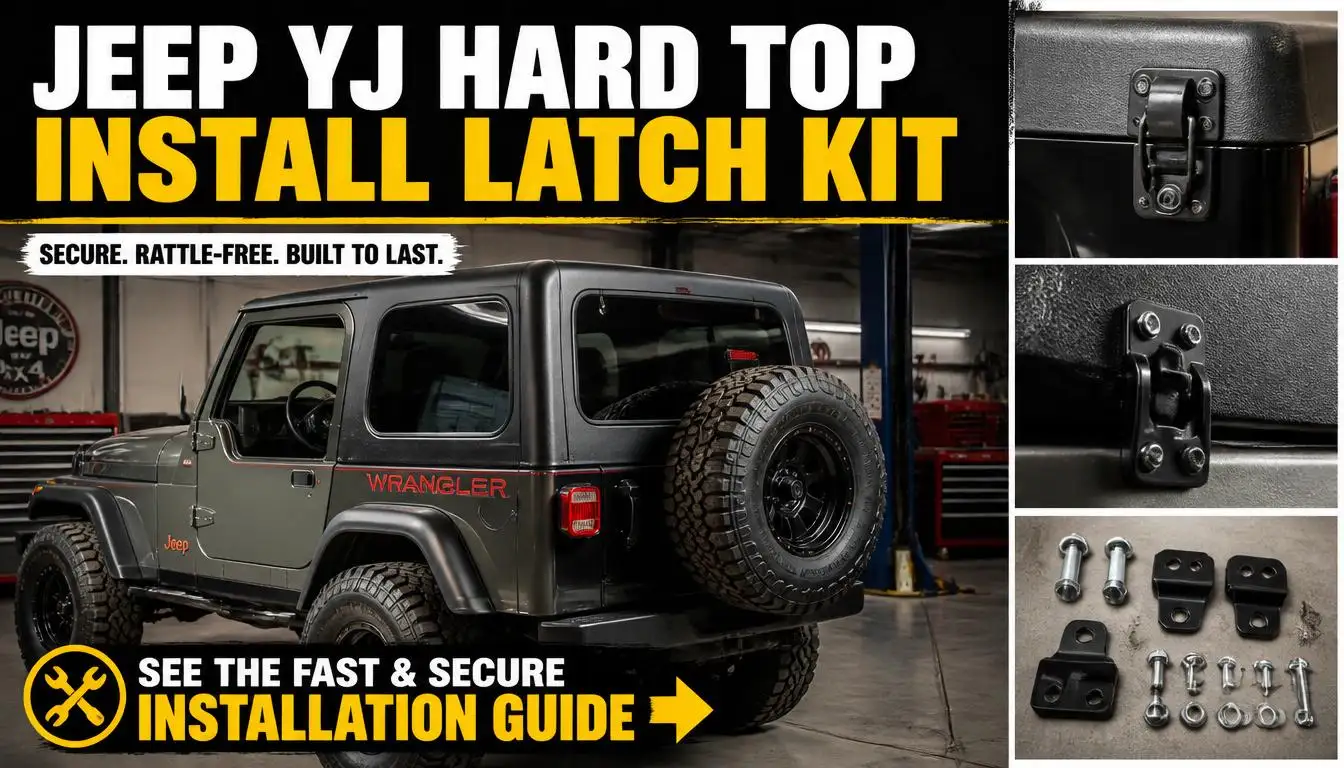
A Jeep YJ Hard Top Install Latch Kit Quick And Durable Fastener Solution helps secure your YJ hardtop to the windshield frame and tub without fighting loose bolts every time. It matters because a poor hardtop fit can cause wind noise, water leaks, rattles, and unsafe movement on rough roads.
If you have ever tried to install a Jeep YJ hardtop with missing bolts, worn latches, or random hardware from a coffee can, you already know the pain. The top shifts, the windshield seal whistles, and every bump makes you wonder if something is coming loose.
I have seen clean Jeep YJs ruined by cheap fasteners and rushed installs. The hardtop itself may be fine, but the latch kit, weatherstrip, and rear mounting hardware decide whether the Jeep feels solid or sloppy.
In this guide, I’ll walk you through how a Jeep YJ Hard Top Install Latch Kit Quick And Durable Fastener Solution works, what to look for, what to avoid, how much it may cost, and when DIY makes sense. I’ll also cover safety, inspection notes, and real-world mistakes that can cost more than the kit itself.
Common Pain Points With Jeep YJ Hard Top Latch Kits
Problem 1: Wind Noise After the Hardtop Is Installed
The most common complaint I hear is simple: “I installed the hardtop, but now it sounds like a window is open.”
This usually happens when the windshield latches do not pull the top down evenly. If one latch is tighter than the other, the seal gets crushed on one side and loose on the other. On a 1993 Jeep Wrangler YJ, that can turn a normal highway drive into a loud, tiring ride.
The fix is to adjust the latch tension slowly. The latch should compress the seal just enough to hold the top firm. Too loose causes noise; too tight can damage the latch, seal, or fiberglass edge.
A good Jeep YJ hard top install latch kit should include adjustable draw latches, keepers, and rear fasteners that work together. Do not judge the install by how hard the latch is to close. Judge it by even seal contact, quiet fit, and no visible top movement.
Problem 2: Missing Rear Fasteners and Nut Plates
Many used Jeep YJ hardtops are sold without complete hardware. I once looked at a used YJ hardtop that had six random bolts, two hardware-store wing nuts, and no matching washers. The seller said, “It worked fine for me.” That was my sign to check everything twice.
The rear section of the hardtop needs secure mounting to the tub. If the holes do not line up, owners sometimes use clamps, oversized bolts, or loose washers. That may feel fine in the driveway, but vibration can loosen weak hardware fast.
“You won’t need any special hardware to hold the rear of the hard top, just six medium-size bolts & nuts with washers.” — Jerry Bransford, Wrangler TJ Forum Technical Contributor
That quote is a good reminder that simple hardware can work, but it must fit correctly. On a YJ, I still prefer a complete kit with captive screws, flat washers, and receptacles because it reduces lost parts and makes removal faster.
Problem 3: Buying the Wrong Kit for a YJ
YJ, TJ, JK, JL, and CJ tops are not all the same. A latch kit listed for a Jeep Wrangler may not fit your 1987–1995 YJ. Some listings mix CJ7 and YJ fitment, while others are for newer TJ or JK hardtops.
Before you buy, confirm:
- Model year fitment
- Windshield latch style
- Rear mounting hardware type
- Whether drilling is needed
- Whether the kit includes both latches and rear fasteners
- Whether seals are sold separately
“It never pays to rush out and make a rash decision that you might regret.” — Jake Fisher, Senior Director, Consumer Reports Auto Test Center
That advice fits Jeep hardware perfectly. A cheap kit may save $20 today and cost you a cracked fiberglass lip, water leak, or second install later.
Jeep YJ Hard Top Install Latch Kit: What It Actually Does
A Jeep YJ hard top install latch kit does two jobs. First, it secures the front of the hardtop to the windshield frame. Second, it helps fasten the rear sides of the top to the Jeep tub.
The front latches matter most for wind noise and water sealing. They pull the top down against the windshield weatherstrip. The rear fasteners keep the hardtop from shifting, bouncing, or rattling over potholes, washboard roads, or trail chatter.
A quality kit may include:
- Two draw latches
- Two keepers
- Rivets
- Captive screws
- Receptacles
- Flat washers
- Rear mounting fasteners
Some kits are quick-release style. These are helpful if you remove your hardtop often in spring and summer. Instead of hunting for loose Torx bolts, you can release the latch or turn captive screws by hand.
Why Quick-Release Fasteners Are Useful
A YJ owner who removes the hardtop once a year can survive with normal bolts. But if you swap between a hardtop and soft top often, quick-release hardware saves time.
Picture this: it is Friday afternoon in Colorado, Ontario, or Wales. The forecast says clear skies, and you want the top off before a weekend trail run. With loose hardware, you may spend 30 minutes looking for missing bolts. With a full fastener kit, removal is more organized.
The real value is not speed alone. The real value is repeatable fit. Every time you reinstall the hardtop, the same latch tension and fastener locations help the top sit correctly.
YJ vs CJ7 vs TJ Fitment
Many aftermarket kits cover 1976–1986 CJ7 and 1987–1995 Wrangler YJ models. That makes sense because the YJ carried over some old-school Jeep body ideas. Still, do not assume every CJ7 part fits your YJ perfectly.
A TJ, sold from 1997–2006, is different. The hardtop shape, rear vents, wiring, and attachment details can vary. If you buy a used top from AutoTrader UK, CarGurus USA, Kijiji Autos Canada, or Carsales Australia, ask for photos of the front latch area, rear holes, seals, and wiring plugs before paying.
How to Install a Jeep YJ Hard Top Latch Kit Safely
Installing a Jeep YJ Hard Top Install Latch Kit Quick And Durable Fastener Solution is usually a DIY-friendly job, but it still needs care. You are drilling near the windshield frame and fiberglass top, so rushing can cause permanent damage.
Tools You May Need
Most installs need basic tools:
- Electric drill
- Correct drill bits
- Center punch
- Pencil or marker
- Pop rivet tool
- Screwdriver or nut driver
- Measuring tape
- Safety glasses
- Painter’s tape
- Helper for lifting the top
A basic DIY install may take 30 minutes to one hour if the top is already aligned and the holes are clean. If the windshield frame is rusty, seals are damaged, or the top has been repaired before, plan for more time.
Step 1: Inspect the Hardtop Before Installing
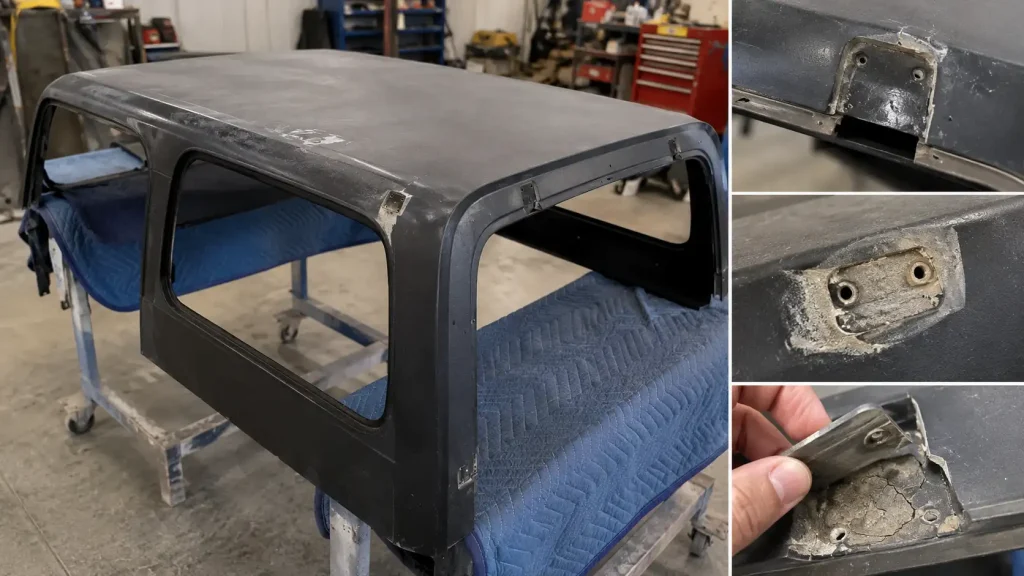
Set the hardtop on padded stands or a soft surface. Check the front fiberglass edge for cracks. Look around the latch mounting areas. If the old latch holes are wallowed out, you may need repair plates or fiberglass work before installing new latches.
Also inspect the rear corners. A hardtop that was stored on concrete may have chipped edges. Small chips are common. Cracks near mounting points are more serious.
I once saw a YJ hardtop that looked clean outside but had cracked fiberglass hidden under the old latch base. The owner installed new hardware anyway. Two weeks later, the latch pulled loose and the wind noise came back.
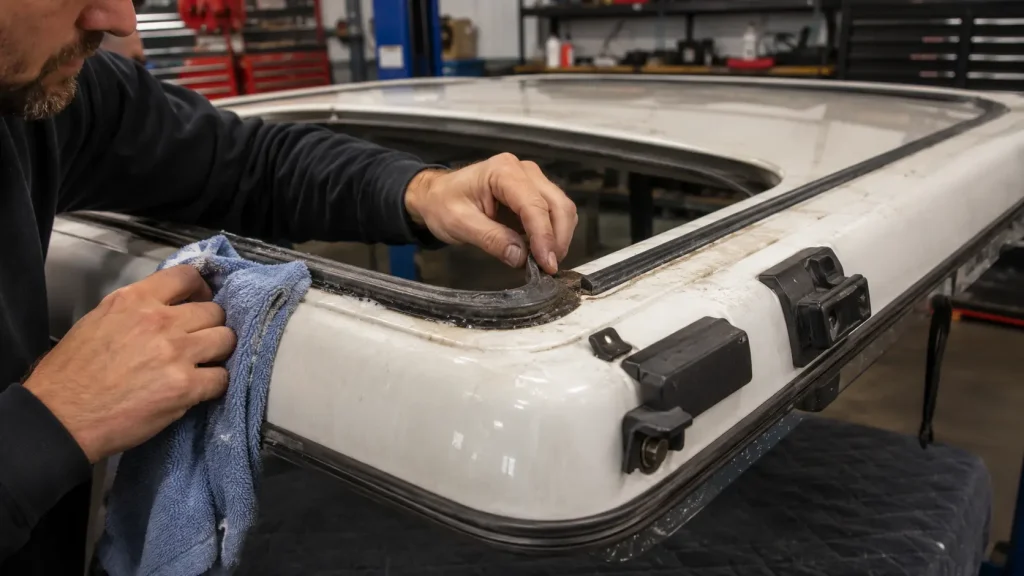
Step 2: Clean and Check the Weatherstrip
The windshield weatherstrip is just as important as the latch kit. If the seal is flat, torn, or dried out, new latches will not fix the leak.
Clean the seal area with mild soap and water. Avoid harsh solvents because old rubber can swell or crack. If the seal has gaps at the corners, replace it before adjusting latch tension.
In the UK, this matters for MOT concerns around vehicle body condition and water intrusion that affects electrical items. In Australia, a roadworthy inspection can also raise issues if a modification or accessory fit creates safety concerns. In Canada and the USA, rules vary by province or state, but a loose hardtop can still fail a basic safety inspection or buyer inspection.
Step 3: Position the Latches Evenly
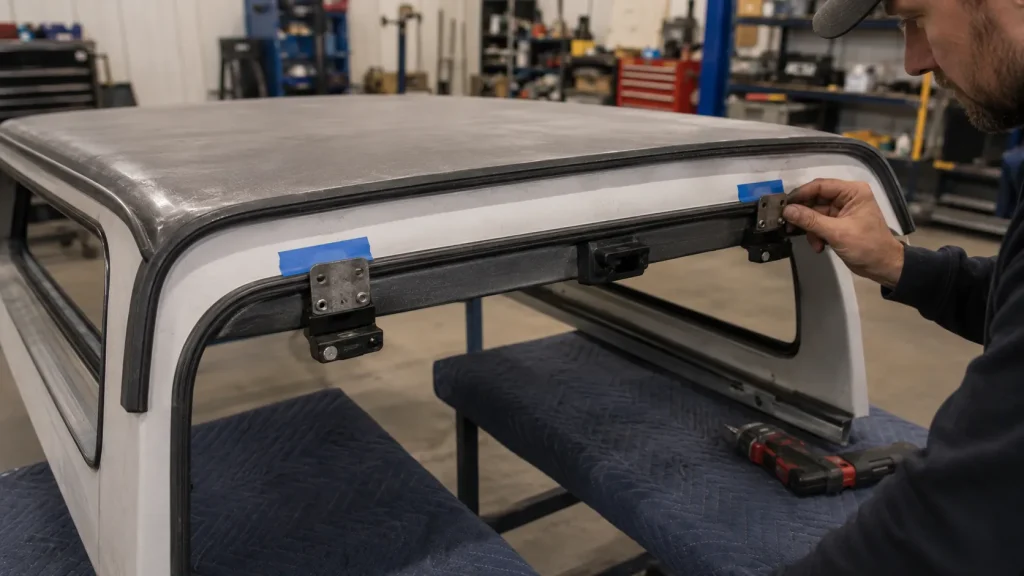
Before drilling, test-fit both latches. The latches should sit evenly behind the sun visor area, and the keepers should align with them. Use painter’s tape to mark placement before drilling.
Do not mount one latch higher than the other. Even a small difference can twist the top against the windshield seal.
The latch should close with firm hand pressure. If you need to force it, stop and adjust. A latch that feels too tight is not safer. It may be stressing the top.
Step 4: Drill Carefully
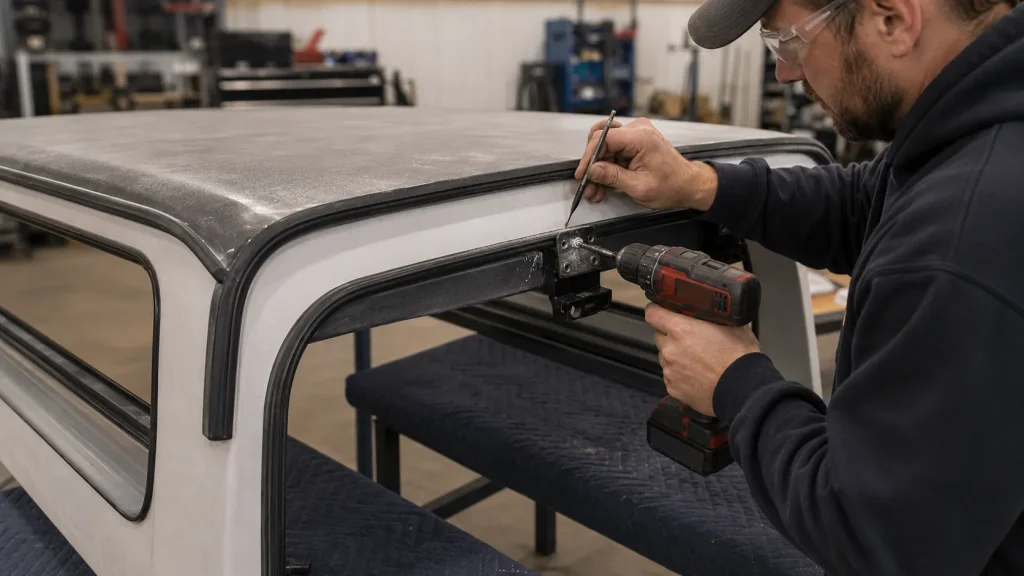
Use a center punch so the drill bit does not walk. Start slow. Drill straight. Fiberglass and thin metal do not forgive sloppy drilling.
Wear safety glasses. Small metal or fiberglass dust can cause injury. If you are not comfortable drilling your windshield frame or hardtop, pay a mechanic, Jeep specialist, or body shop.
DIY is fine for careful owners. Professional help is smarter if rust, cracked fiberglass, stripped holes, or seal damage is already present.
Step 5: Install and Adjust the Hardware
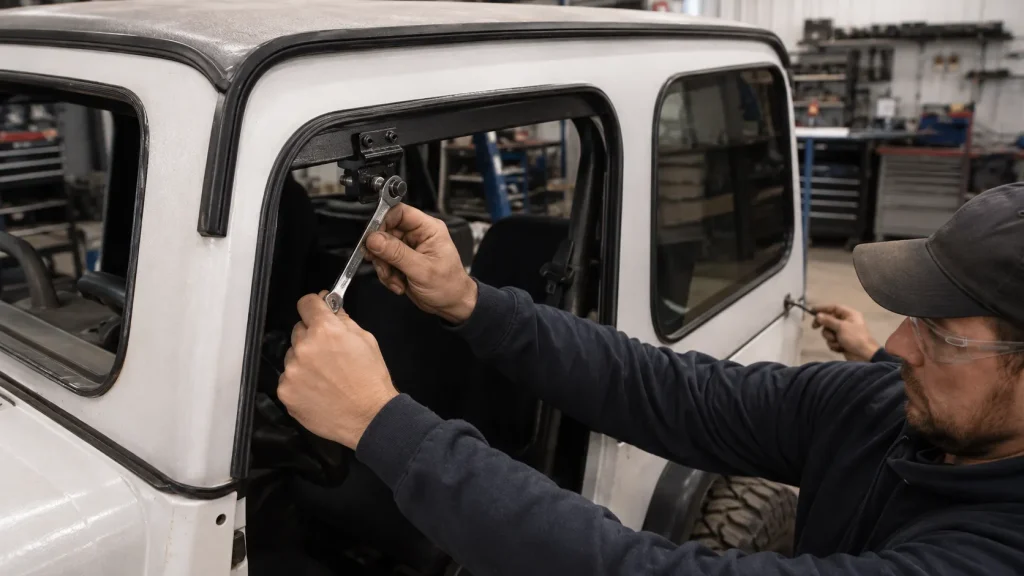
Install the latch and keeper hardware, then adjust the threaded section until the latch compresses the top slightly. Tighten the lock nut so the setting does not move.
For the rear fasteners, align the hardtop holes with the tub holes before tightening. Do not pull the top sideways with bolts. If the holes do not line up, loosen everything, reposition the top, and try again.
“Bear in mind, though, that the hardtop is heavy, so you’ll need a friend to help whenever you want to remove it.” — Travis Langness, Automotive Reviewer, Edmunds
That matters during install too. A YJ hardtop is awkward, and trying to muscle it alone can scratch paint, crack corners, or injure your back.
Cost Breakdown for a Jeep YJ Hard Top Install Latch Kit
A realistic parts budget depends on whether you need only rear bolts, front latches, seals, or a full quick-release hardware kit.
Typical estimates:
- Basic rear bolt and washer setup: $10–$35 USD / £8–£28 / CAD $15–$50 / AUD $16–$55
- Front latch pair: $30–$80 USD / £24–£65 / CAD $40–$110 / AUD $45–$125
- Full quick-release latch and fastener kit: $90–$140 USD / £70–£110 / CAD $125–$190 / AUD $140–$215
- Windshield weatherstrip: $15–$45 USD / £12–£36 / CAD $20–$65 / AUD $24–$70
- Professional installation: $90–$250 USD / £75–£200 / CAD $125–$340 / AUD $140–$380
These are practical ranges, not fixed quotes. Prices change by country, shipping, brand, taxes, and Jeep parts availability.
In the USA, YJ parts are still common through Jeep specialty shops and online marketplaces. In the UK and Australia, shipping can make a small kit feel expensive. In Canada, winter storage and salt exposure can mean you also need seals, rust repair, or replacement hardware.
Where Owners Waste Money
The biggest waste is buying a latch kit before checking the seals. If the weatherstrip is crushed, the best latch kit will still leak.
The second mistake is buying the wrong model-year kit. A kit for a TJ or JK may look close in photos but fail at the mounting points.
The third mistake is paying for a used hardtop without the hardware. Missing latches, wiring, seals, rear glass struts, and wiper parts can add up fast.
DIY vs Professional Install
A DIY install makes sense if your Jeep YJ has clean mounting holes, solid seals, and no serious rust. If you have basic tools and patience, the job is manageable.
DIY is best when:
- The hardtop already fits the Jeep
- The old hardware is present as a guide
- The windshield frame is rust-free
- No fiberglass repair is needed
- You can lift the top with a helper
Professional help is better when:
- The windshield frame has rust
- The old holes are stripped
- The top has cracks near latch points
- The seals are badly misaligned
- You need wiring for rear defrost or wiper
- You are unsure where to drill
A licensed mechanic may not be legally required for a simple latch kit, but safety matters. If your install affects body structure, seat belt mounting, wiring, glass, or visibility, get expert help. In the USA, businesses must avoid making safety equipment ineffective.
In Australia, structural changes can need approval under state rules. In the UK, MOT checks can flag unsafe body condition or insecure attachments.
Safety and Legal Notes for USA, UK, Canada, and Australia
A Jeep YJ hardtop is removable, but that does not mean the install can be loose. The hardtop sits above passengers, glass, wiring, and seals. If it moves at speed, you have a real safety issue.
In the USA, use the NHTSA recall lookup before buying any used Wrangler or major used Jeep part vehicle. A YJ is older, so some recalls may not show by VIN due to age limits, but checking still takes only a few minutes.
In the UK, the MOT test includes body structure and attachments. A hardtop that is loose, sharp, badly cracked, or affecting door closure can create problems.
In Canada, provincial inspections differ. Ontario, British Columbia, Alberta, and other provinces may treat vehicle safety inspections differently, but loose body equipment is never something to ignore.
In Australia, roadworthy certificate rules vary by state. A simple accessory install may be fine, but modifications that affect structural integrity, safety systems, or handling can need approval.
The simple rule I follow is this: if the hardtop moves when you push it firmly by hand, it is not ready for the road.
Common Myths About Jeep YJ Hard Top Fasteners
Myth 1: Any Bolt That Fits the Hole Is Fine
No. The bolt must fit the hole, clamp correctly, use the right washer, and hold tension. A random long bolt can damage the tub or hardtop edge. A bolt that is too short may not hold enough thread.
Myth 2: Tighter Always Means Better
No. Overtightening can crack fiberglass, distort the seal, strip threads, or damage receptacles. Snug and even is better than forced and uneven.
Myth 3: Wind Noise Is Normal on Every YJ
Some wind noise is normal. A loud whistle at the windshield is not. If the noise changes when you press up on the top or push the latch area, the seal or latch tension needs attention.
Myth 4: A Used Hardtop Is a Good Deal at Any Price
A used hardtop can be a great buy, but only if you check the full cost. Missing glass, broken lift struts, cracked corners, bad seals, missing latch hardware, and damaged wiring can turn a cheap top into a money pit.
I once saw a 1995 Jeep YJ hardtop listed cheaply because the seller said it “just needed bolts.” In person, the front latch points were cracked, the rear glass seal was dry, and the defrost wiring was cut. The buyer would have spent more fixing it than buying a cleaner top.
Long-Term Maintenance After Installing the Latch Kit
Once your Jeep YJ hardtop is installed, do not forget about it. The hardware should be checked several times a year, especially if you drive off-road or live where roads are rough.
Use this simple schedule:
- Check latch tension after the first drive
- Recheck rear fasteners after one week
- Inspect seals before winter
- Check for leaks after heavy rain
- Lubricate latch moving points lightly
- Look for rust around drilled holes
- Store loose parts in a labeled bag if removed
For winter driving in Canada or northern USA states, salt can attack hardware and windshield frames. In the UK, constant wet weather can expose weak seals quickly. In Australia, heat can dry rubber seals and make old weatherstrip shrink.
A quick inspection every season can save your Jeep from leaks, mold, rust, and annoying cabin noise.
Best Buying Checklist for a Quick and Durable Fastener Solution
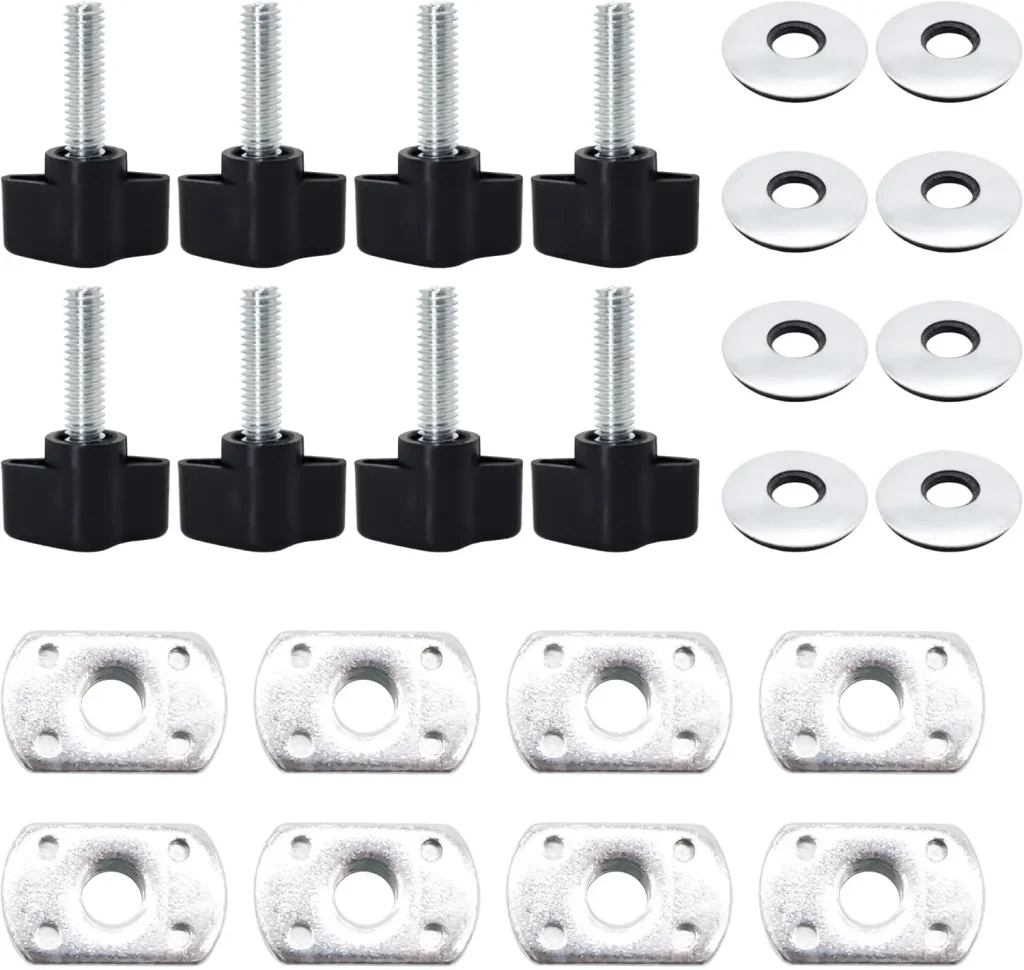
Before buying a Jeep YJ hard top install latch kit, I would check these points:
- Does it clearly fit 1987–1995 Jeep Wrangler YJ?
- Does it include both front latch hardware and rear fasteners?
- Are keepers included?
- Are rivets included?
- Does it need drilling?
- Are instructions included?
- Are seals separate?
- Is the latch adjustable?
- Is the hardware corrosion-resistant?
- Can replacement parts be bought later?
If the listing does not answer those questions, ask the seller before ordering. Clear fitment is better than guessing.
For most owners, the best solution is a complete kit plus fresh weatherstrip if the old seal is worn. That gives you a tighter fit, faster install, fewer lost parts, and a better chance of keeping the cabin dry.
Frequently Asked Questions
What is a Jeep YJ hard top latch kit?
A Jeep YJ hard top latch kit is a hardware set that helps secure the hardtop to the windshield frame and body tub. It may include draw latches, keepers, rivets, captive screws, washers, and rear fasteners.
Can I install a Jeep YJ hardtop latch kit myself?
Yes, many owners can install one with basic tools, a drill, and a helper. If the windshield frame is rusty, holes are stripped, or the fiberglass is cracked, use a Jeep specialist or body shop.
Why does my Jeep YJ hardtop leak after installation?
Leaks usually come from worn weatherstrip, uneven latch tension, cracked fiberglass, or poor hardtop alignment. Replace bad seals first, then adjust the latches evenly.
How tight should Jeep YJ hardtop latches be?
They should close firmly by hand and compress the seal slightly. If you must force the latch, it is too tight or misaligned.
Are CJ7 and Jeep YJ hardtop latch kits the same?
Some aftermarket kits fit both CJ7 and YJ models, but you should never assume. Always confirm the year range, latch style, mounting points, and whether the kit matches your hardtop.
Final Thoughts
A Jeep YJ Hard Top Install Latch Kit Quick And Durable Fastener Solution is a small upgrade that can make your Jeep feel tighter, quieter, and safer. The key is choosing the right kit, checking the weatherstrip, aligning the top correctly, and avoiding overtightened hardware.
Remember the three big takeaways: buy the correct YJ-fit kit, adjust the latches evenly, and never ignore loose rear fasteners. Do that, and your hardtop will be easier to install, easier to remove, and far less likely to rattle or leak.
Take your time, check the fit twice, and your Jeep YJ will reward you with a cleaner, stronger hardtop setup.

“Cars aren’t just machines. They’re freedom, memory, and a little bit of grease under your fingernails.”
I’m Theodore Roosevelt—though my friends just call me “Ted” (and no, I’m not related to the president, though I do share his love for adventure). I grew up in Detroit in the 1970s, back when the city was still the heart of the American auto industry. My first love was a rusted-out 1967 Mustang my father and I rebuilt in our garage when I was fifteen. That project taught me that cars have souls. After spending twenty years as a mechanic and another ten writing for magazines, I started this blog to help everyday drivers and weekend wrenchers feel confident under the hood. Whether you’re restoring a classic or just trying to keep your daily driver alive for one more winter, I’m here to help you get there.