
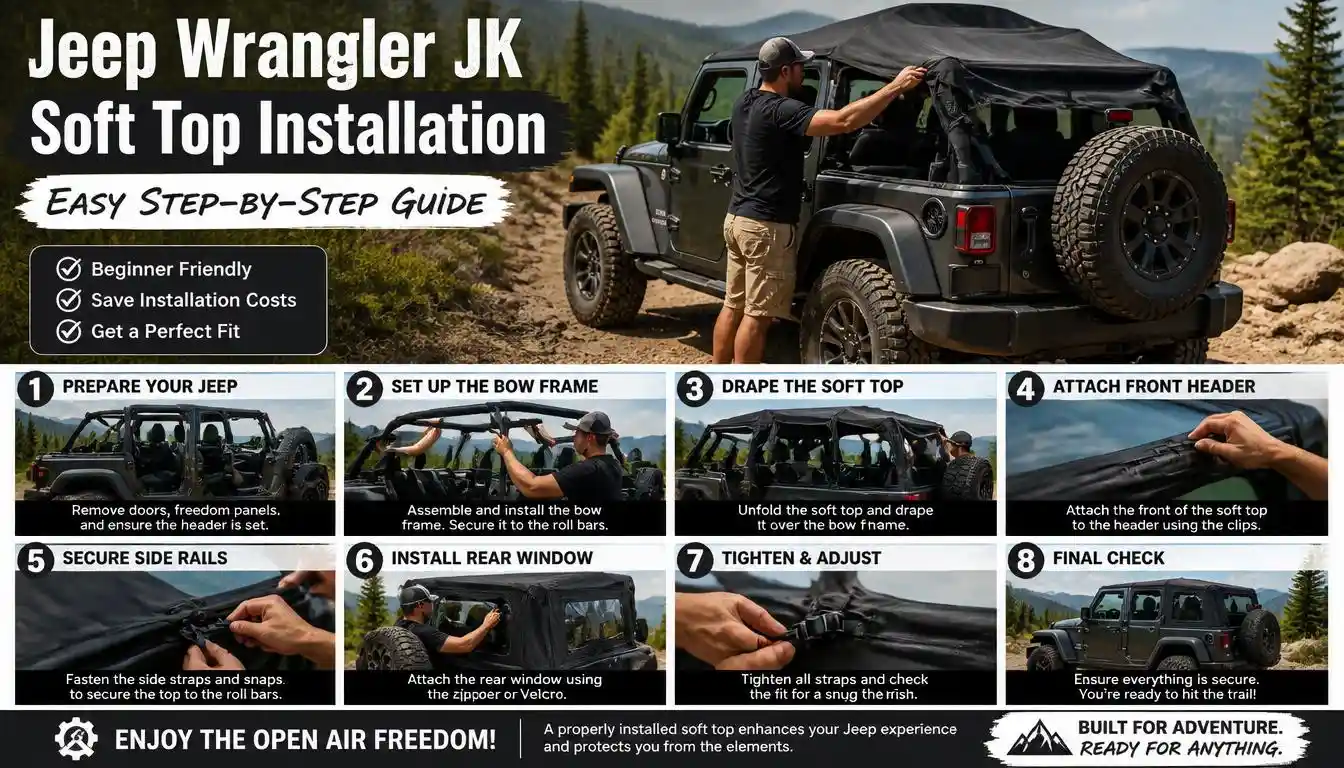
Installing a soft top on your Jeep Wrangler JK can seem like a challenging task, especially if you have never worked with Jeep roof systems before.
However, with the right preparation, proper tools, and a clear installation process, most Jeep owners can complete the job themselves without paying expensive professional installation fees. Whether you are replacing an old worn-out soft top, upgrading to an aftermarket option, or installing a new top for your 2007–2018 Jeep Wrangler JK, understanding the correct installation steps is essential for achieving a secure fit, proper weather protection, and a factory-style appearance.
This Jeep Wrangler JK Soft Top Installation Instructions Easy Step By Step Guide will walk you through everything you need to know, from preparing your Jeep and gathering tools to installing the frame, attaching fabric panels, securing windows, and troubleshooting common installation issues.
You will also learn about soft top compatibility, installation tips for different brands, common mistakes to avoid, and maintenance practices that help extend the life of your Jeep soft top.
A properly installed soft top does more than improve the appearance of your Wrangler JK. It protects your interior from rain, dust, wind, and harsh weather conditions while allowing you to enjoy the open-air driving experience that Jeep owners love.
Understanding Jeep Wrangler JK Soft Top System Before Installation
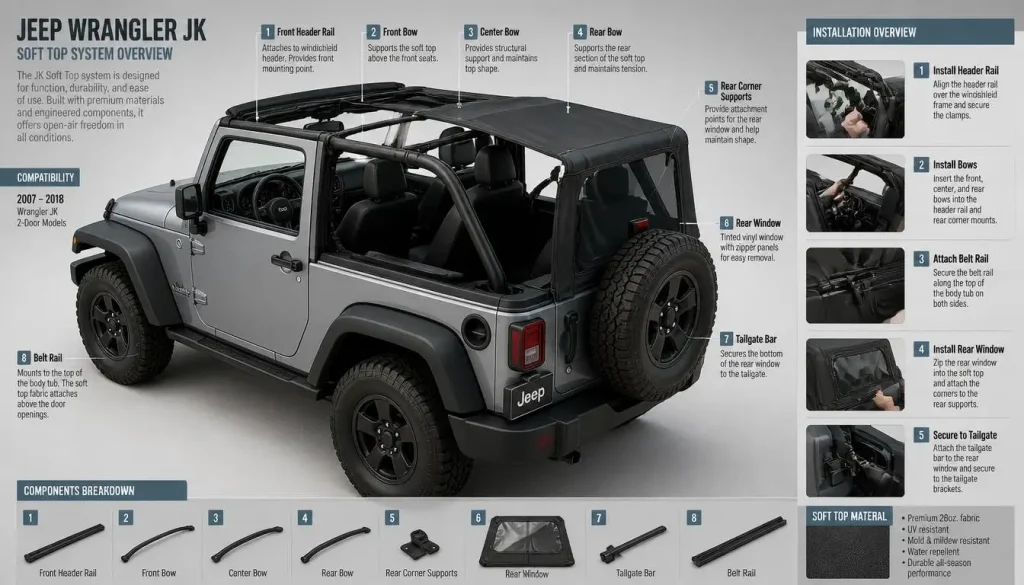
Before beginning the installation process, it is important to understand how the Jeep Wrangler JK soft top system works. Unlike a traditional vehicle roof, a soft top consists of multiple components that work together to create a flexible but durable weather-resistant covering.
The Jeep Wrangler JK soft top system typically includes:
- Fabric top material
- Supporting frame bows
- Door surrounds
- Front header assembly
- Rear window bar
- Side window panels
- Rear window panel
- Mounting brackets and hardware
Each component plays an important role in maintaining proper tension, preventing leaks, and ensuring that the top remains securely attached while driving.
A mistake during installation, such as incorrect frame alignment or improperly installed windows, can lead to problems like water leaks, excessive wind noise, loose fabric, or difficulty opening and closing the top.
Jeep Wrangler JK Soft Top Compatibility (2007–2018)
The Jeep Wrangler JK generation was produced from 2007 to 2018 and includes both two-door and four-door models. Before purchasing or installing a soft top, you need to confirm that the top is compatible with your specific Wrangler JK model.
Jeep Wrangler JK 2-Door Soft Top Installation
The two-door Wrangler JK uses a shorter frame design and different window dimensions compared to the Unlimited version. Always verify that the soft top kit specifically mentions compatibility with the two-door JK model.
Jeep Wrangler Unlimited JK 4-Door Soft Top Installation
The Jeep Wrangler Unlimited JK has a longer wheelbase and requires a different soft top structure. Four-door owners should select a soft top designed specifically for the Unlimited JK.
Jeep Wrangler JK Model Years
Most soft tops designed for Jeep Wrangler JK models cover:
- 2007 Jeep Wrangler JK
- 2008 Jeep Wrangler JK
- 2009 Jeep Wrangler JK
- 2010 Jeep Wrangler JK
- 2011 Jeep Wrangler JK
- 2012 Jeep Wrangler JK
- 2013 Jeep Wrangler JK
- 2014 Jeep Wrangler JK
- 2015 Jeep Wrangler JK
- 2016 Jeep Wrangler JK
- 2017 Jeep Wrangler JK
- 2018 Jeep Wrangler JK
Although many tops fit across multiple years, always check manufacturer specifications before installation.
Tools Required for Jeep Wrangler JK Soft Top Installation
Having the correct tools ready before starting will make the installation process faster and prevent unnecessary frustration.
Basic Tools Needed
You may need:
- Torx screwdriver set
- Socket wrench set
- Ratchet
- Allen keys
- Trim removal tools
- Cleaning cloth
- Mild lubricant
- Rubber gloves
Many Jeep Wrangler JK components use Torx bolts, so having the correct Torx sizes is especially important.
Recommended Torx Sizes
Commonly used sizes include:
- T40 Torx
- T50 Torx
- T25 Torx
The exact requirements can vary depending on your soft top brand and model.
Preparation Before Installing Jeep Wrangler JK Soft Top
Proper preparation is one of the most important parts of a successful soft top installation. Rushing this stage can create alignment problems later.
Remove the Existing Soft Top
If you are replacing an old soft top, remove the existing components carefully.
Follow these steps:
- Remove side and rear windows.
- Disconnect the rear window bar.
- Release front header latches.
- Fold down or remove the existing fabric.
- Remove old frame components if required.
Store removed hardware safely because some replacement tops may reuse existing brackets.
Inspect All New Soft Top Components
Before installation, open the package and confirm that all parts are included.
Check for:
- Soft top fabric
- Window panels
- Door surrounds
- Frame brackets
- Screws and clips
- Installation instructions
Missing small hardware pieces can delay the entire installation process.
Jeep Wrangler JK Soft Top Installation Instructions: Step-by-Step Process
This section explains the complete installation process for a Jeep Wrangler JK soft top.
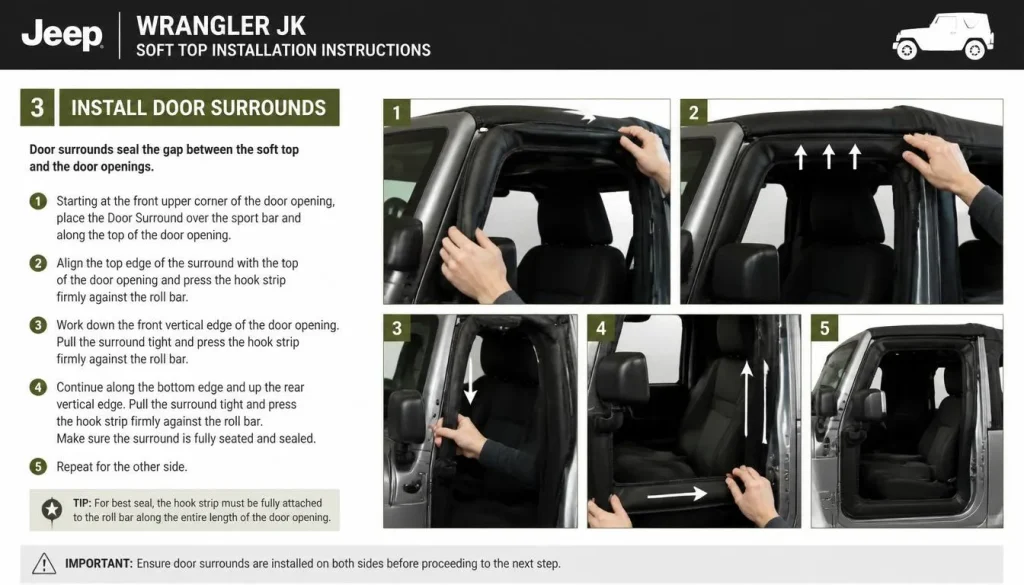
Step 1: Install Door Surrounds
Door surrounds provide the connection point between the Jeep body and the soft top system.
To install them:
- Position the front door surrounds correctly.
- Align mounting holes with factory attachment points.
- Secure bolts and screws.
- Confirm that the surrounds sit evenly.
Incorrect door surround placement can cause water leaks around the doors.
Step 2: Install the Soft Top Frame Assembly
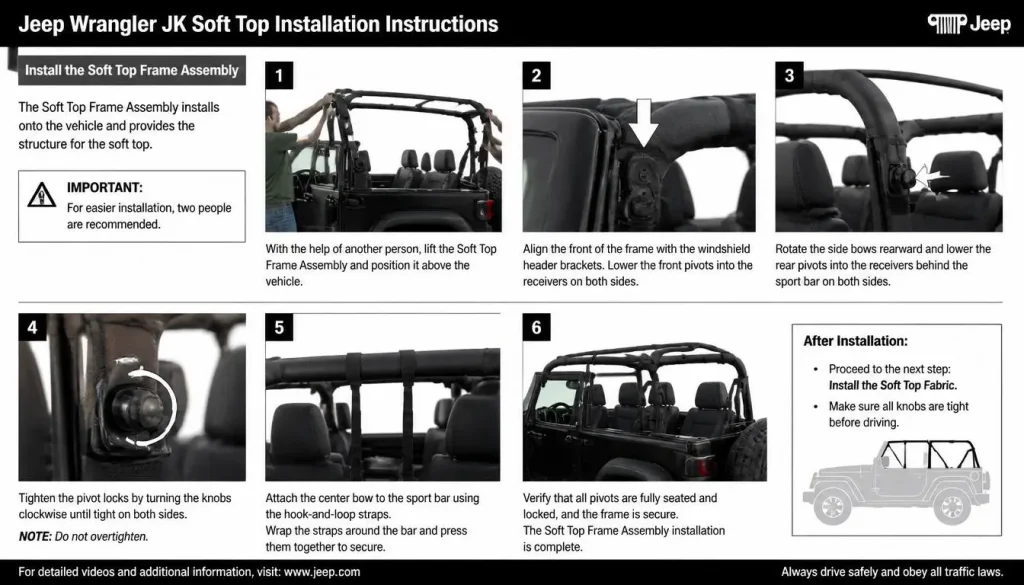
The frame creates the structure that supports the fabric roof.
- Place the frame components into their mounting locations.
- Attach the front and rear bows.
- Secure all brackets.
- Check that the frame folds and moves correctly.
Do not fully tighten every bolt immediately. Allow some adjustment until the entire frame is aligned.
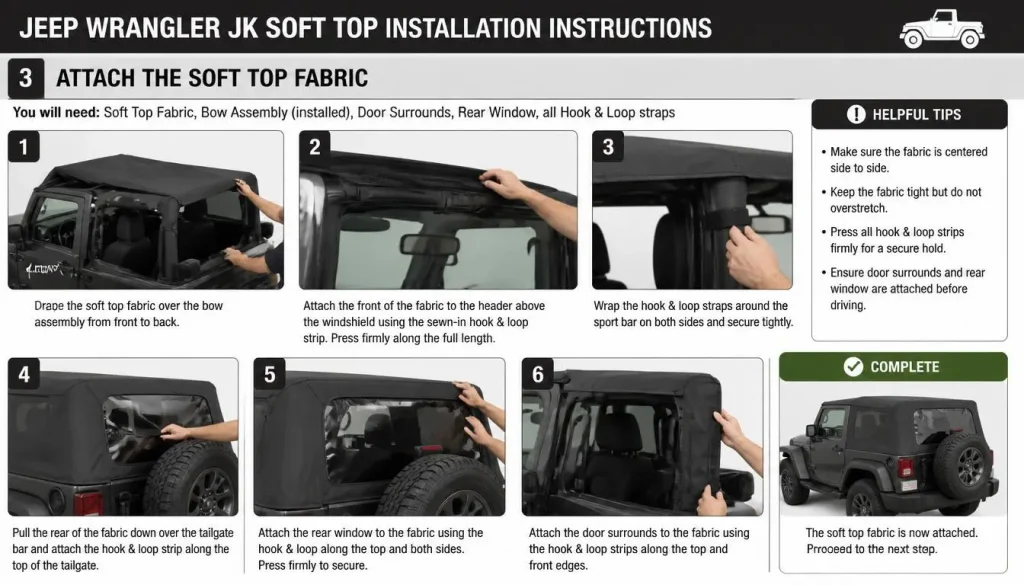
Step 3: Attach the Soft Top Fabric
Installing the fabric is usually the most challenging part because the material needs proper tension.
Follow these steps:
- Place the fabric over the frame.
- Attach the front header section.
- Stretch the fabric toward the rear.
- Secure the fabric clips and retaining points.
If the fabric feels too tight, do not force it. Soft tops naturally stretch, especially when installed in warmer temperatures.
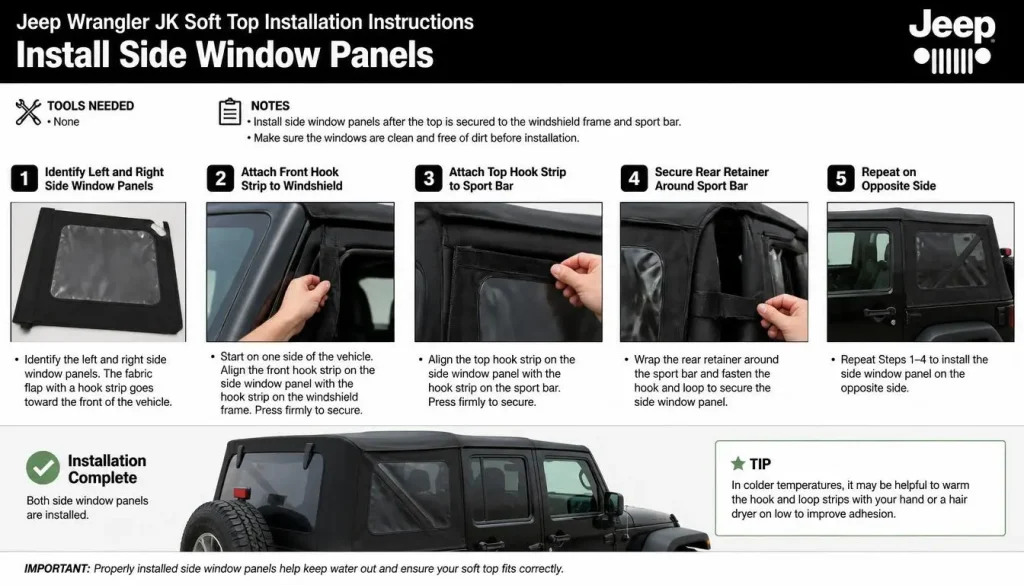
Step 4: Install Side Window Panels
Side windows require careful handling because the plastic material can be damaged easily.
Installation process:
- Insert the window edges into the correct channels.
- Attach the zipper carefully.
- Secure the retaining strips.
- Check that the window sits evenly.
Avoid pulling aggressively on the zipper because this can damage the window system.
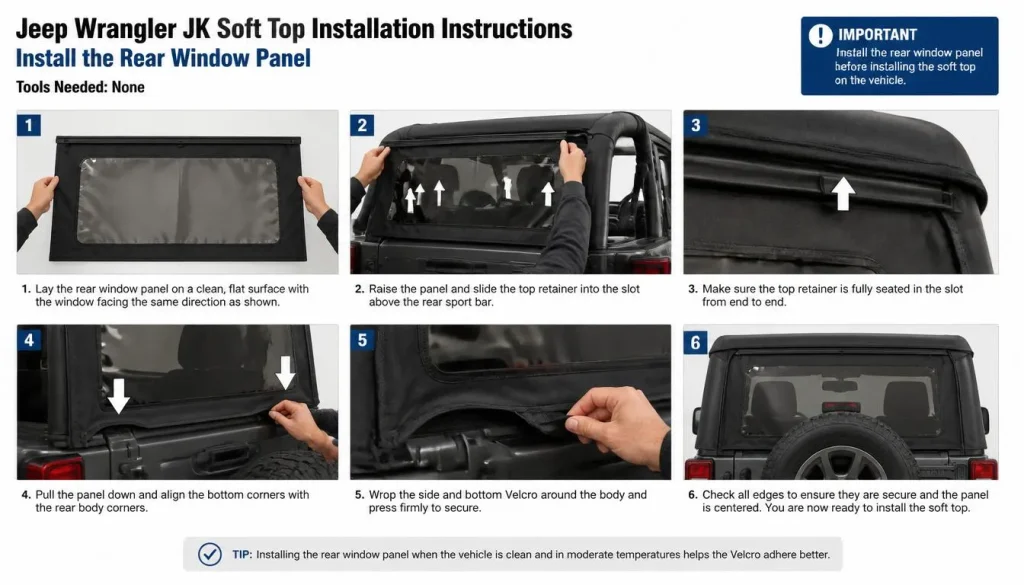
Step 5: Install the Rear Window Panel
The rear window completes the enclosure of the soft top.
Steps:
- Attach the rear window zipper.
- Insert the tailgate bar.
- Lock the window into position.
- Check the alignment around all edges.
A properly installed rear window helps prevent water intrusion and reduces wind noise.
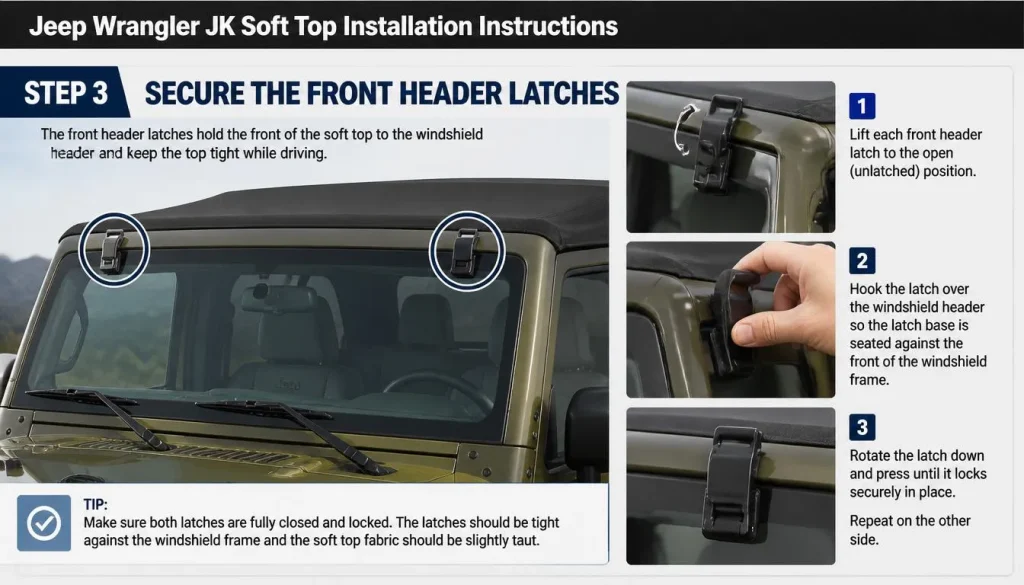
Step 6: Secure the Front Header Latches
The final step is locking the soft top to the windshield frame.
Complete the process:
- Pull the front header forward.
- Align the latch mechanisms.
- Secure both sides.
- Check overall fabric tension.
The soft top should feel tight but not overstretched.
Installation Instructions for Popular Jeep Wrangler JK Soft Top Brands
Different manufacturers design their soft tops with slightly different hardware systems and installation methods. While the general process remains similar, checking the brand-specific instructions can help you avoid compatibility issues and installation mistakes.
Bestop Soft Top Installation Guide for Jeep Wrangler JK
Bestop is one of the most popular soft top manufacturers for Jeep Wrangler owners. Their products are known for factory-style fit, durable materials, and user-friendly installation systems.
Popular Bestop options include:
- Bestop Supertop NX
- Bestop Trektop
- Bestop Replace-A-Top
When installing a Bestop soft top:
- Confirm your Jeep Wrangler JK model compatibility.
- Install door surrounds and mounting brackets.
- Assemble the frame system.
- Attach the fabric top.
- Install side and rear windows.
- Secure front latches.
Bestop soft tops often require proper fabric stretching during installation. If the material appears too tight, allow the top to warm up before forcing any connections.
Smittybilt Soft Top Installation Guide for Jeep Wrangler JK
Smittybilt offers affordable soft top solutions for Jeep Wrangler JK owners.
During installation:
- Verify all mounting hardware is included.
- Follow the frame placement order carefully.
- Avoid tightening bolts before final alignment.
- Check window seals after installation.
A common mistake with aftermarket soft tops is installing the frame incorrectly, which can create unnecessary fabric tension.
Mopar Jeep Wrangler JK Soft Top Installation
Mopar soft tops are designed to match factory Jeep specifications.
Benefits include:
- OEM-style fit
- Factory-compatible hardware
- Reliable weather sealing
Mopar soft tops generally follow the same installation steps:
- Install supporting hardware.
- Attach frame components.
- Secure fabric panels.
- Install windows.
- Check final alignment.
Jeep Wrangler JK Soft Top Installation by Model Year
Although most Jeep Wrangler JK soft tops cover multiple years, some small design differences may exist.
2007–2011 Jeep Wrangler JK Soft Top Installation
Early JK models may have slightly different mounting hardware compared with later versions.
Important checks:
- Confirm frame compatibility.
- Verify door surround design.
- Match window dimensions.
2012–2018 Jeep Wrangler JK Soft Top Installation
Later JK models include updated interior and exterior designs.
Before installation:
- Confirm aftermarket top compatibility.
- Check mounting brackets.
- Review manufacturer instructions.
How to Remove and Replace Jeep Wrangler JK Soft Top
Many Jeep owners install a new soft top because their old one has become damaged, faded, or worn out.
The replacement process includes both removal and installation.
Removing the Old Soft Top
Follow these steps:
- Remove rear and side windows.
- Disconnect the rear window bar.
- Release windshield latches.
- Fold down the soft top.
- Remove damaged fabric or frame parts.
Installing the Replacement Soft Top
After removing the old system:
- Clean the mounting areas.
- Install replacement hardware.
- Assemble the new frame.
- Attach the fabric.
- Install windows.
- Test all opening and closing functions.
A replacement soft top installation is usually easier when you reuse properly functioning factory hardware.
Common Jeep Wrangler JK Soft Top Installation Problems and Solutions
Even with proper instructions, some installation issues are common among Jeep owners. Understanding these problems can save time and prevent damage.
Why Is My Jeep Wrangler JK Soft Top Too Tight?
A tight soft top is one of the most common issues after installation.
Possible causes:
- New fabric has not stretched yet.
- Installation was done in cold weather.
- Frame is not properly aligned.
- Fabric was attached incorrectly.
Solutions:
- Park the Jeep in sunlight for a few hours.
- Install the top in warmer temperatures.
- Recheck frame alignment.
- Avoid forcing zippers or latches.
Why Won’t My Jeep Soft Top Zipper Close?
If the zipper is difficult to close:
Possible reasons:
- Window is not aligned.
- Fabric tension is uneven.
- Dirt is blocking the zipper track.
Fix:
- Remove pressure from the fabric.
- Realign the window.
- Clean the zipper track.
- Apply suitable zipper lubricant.
Why Does My Jeep Wrangler JK Soft Top Leak Water?
Water leaks usually happen because of installation mistakes.
Common leak points:
- Door surrounds
- Window edges
- Windshield header
- Rear window seals
Solutions:
- Check all seals.
- Confirm windows are properly installed.
- Tighten loose mounting hardware.
- Adjust fabric alignment.
How to Reduce Jeep Soft Top Wind Noise
Soft tops naturally produce more wind noise than hard tops, but proper installation can reduce it.
Tips:
- Ensure all windows are fully sealed.
- Check door surround alignment.
- Remove loose fabric areas.
- Replace damaged weather seals.
Jeep Wrangler JK Soft Top Installation Mistakes to Avoid
Avoid these common mistakes:
Installing in Cold Weather
Cold temperatures make soft top fabric less flexible and harder to stretch.
Forcing Windows Into Place
Plastic windows can crack or become permanently damaged if forced.
Tightening Hardware Too Early
Complete alignment should be checked before fully tightening bolts.
Ignoring Manufacturer Instructions
Every soft top brand may have unique installation requirements.
Skipping Final Inspection
Always check:
- Door seals
- Window placement
- Frame movement
- Latch security
Best Weather Conditions for Installing Jeep Wrangler JK Soft Top
Temperature plays an important role during installation.
The ideal conditions are:
- Warm outdoor temperature
- Dry weather
- Direct sunlight when possible
Warm fabric becomes more flexible, making it easier to stretch and attach properly.
Installing during extremely cold weather can make the process frustrating and may cause improper fitting.
Jeep Wrangler JK Soft Top Maintenance Tips
Proper maintenance helps your soft top last longer and maintain its appearance.
Clean the Fabric Regularly
Remove:
- Dust
- Mud
- Road debris
- Tree sap
Use products designed specifically for convertible tops.
Protect the Plastic Windows
Avoid:
- Harsh chemicals
- Abrasive cleaners
- Rough towels
Use microfiber cloths and plastic-safe cleaners.
Maintain Zippers
Keep zippers clean and lubricated to prevent sticking.
Inspect Hardware Regularly
Check:
- Bolts
- Clips
- Frame connections
- Seals
Regular inspection helps prevent expensive repairs.
OEM vs Aftermarket Jeep Wrangler JK Soft Top Installation
When choosing a replacement soft top for your Jeep Wrangler JK, you will usually have two options: an OEM-style soft top or an aftermarket soft top. Understanding the differences can help you choose the right option based on your budget, driving needs, and installation preferences.
OEM Jeep Wrangler JK Soft Top
OEM (Original Equipment Manufacturer) soft tops are designed to match the original Jeep specifications.
Advantages of OEM Soft Tops:
- Factory-style fit and appearance
- Better compatibility with original hardware
- Reliable weather protection
- Easier installation for many Jeep owners
Disadvantages:
- Usually more expensive
- Fewer customization options
- Limited availability for older JK models
OEM soft tops are a good choice for Jeep owners who want a factory replacement and a simple installation experience.
Aftermarket Jeep Wrangler JK Soft Tops
Aftermarket soft tops are produced by third-party manufacturers and often provide more features and styles.
Advantages of Aftermarket Soft Tops:
- More affordable options
- Additional design choices
- Improved materials in some models
- Options for different budgets
Disadvantages:
- Installation may require more adjustment
- Fit can vary between brands
- Instructions may differ significantly
Popular aftermarket soft top brands include Bestop, Smittybilt, and other Jeep accessory manufacturers.
How Much Does Jeep Wrangler JK Soft Top Installation Cost?
The cost of installing a Jeep Wrangler JK soft top depends on whether you install it yourself or hire a professional.
DIY Installation Cost
If you install the soft top yourself:
- Installation cost: Usually free
- Tools: $20–$100 if you do not already own them
- Time required: Approximately 2–5 hours
DIY installation is popular among Jeep owners because it saves money and provides a better understanding of the vehicle.
Professional Installation Cost
Professional installation may cost:
- Around $200–$600 depending on location and complexity
The final price depends on:
- Soft top brand
- Installation difficulty
- Shop labor rates
- Additional hardware requirements
For many Jeep Wrangler JK owners, learning how to install the soft top themselves can save significant money.
Can One Person Install a Jeep Wrangler JK Soft Top?
Yes, one person can install many Jeep Wrangler JK soft tops, especially replacement fabric tops and lighter systems.
However, having an extra person can make certain steps easier, including:
- Positioning the frame
- Stretching fabric
- Installing large window panels
For first-time installers, having assistance can reduce installation time and prevent mistakes.
Jeep Wrangler JK Soft Top Installation Checklist
Before considering the installation complete, review this checklist:
Frame Checklist
✓ All frame components are connected
✓ Bows are correctly positioned
✓ Hardware is tightened properly
Fabric Checklist
✓ Fabric is evenly stretched
✓ No loose areas exist
✓ Front header is secured
Window Checklist
✓ Side windows are installed correctly
✓ Rear window is locked properly
✓ Zippers move smoothly
Weather Protection Checklist
✓ Door seals are aligned
✓ No visible gaps exist
✓ Water leak points are checked
Frequently Asked Questions About Jeep Wrangler JK Soft Top Installation
How long does it take to install a Jeep Wrangler JK soft top?
A first-time installation usually takes between 3 and 5 hours. Experienced Jeep owners may complete the process within 1 to 2 hours. Installation time depends on the soft top brand, hardware condition, and whether you are replacing an old top or installing a completely new system.
Can I install a soft top on my Jeep Wrangler JK myself?
Yes, most Jeep Wrangler JK owners can install a soft top themselves by following proper instructions. Having basic tools, patience, and enough working space will make the process much easier.
What tools are needed to install a Jeep Wrangler JK soft top?
Common tools include Torx screwdrivers, a socket wrench, ratchet, trim tools, and basic hand tools. Some soft top brands may require additional tools depending on their mounting system.
Why is my Jeep Wrangler JK soft top not fitting properly?
A soft top may not fit correctly because of:
- Incorrect frame installation
- Cold weather conditions
- Wrong model compatibility
- Improper fabric alignment
Always confirm that the soft top matches your exact Jeep Wrangler JK model.
Can I install a Jeep Wrangler JK soft top in cold weather?
Yes, but it is not recommended. Cold temperatures make the fabric less flexible and can make installation much harder. Installing in warmer weather allows the material to stretch naturally.
How do I stretch a tight Jeep Wrangler JK soft top?
If your soft top feels too tight:
- Park the Jeep in sunlight
- Allow the fabric to warm up
- Recheck frame alignment
- Avoid forcing latches or zippers
New soft tops often become easier to fit after a few uses.
How often should I replace my Jeep Wrangler JK soft top?
A soft top usually lasts several years depending on:
- Weather exposure
- Cleaning habits
- Storage conditions
- Material quality
Signs that replacement may be needed include cracks, fading, leaks, damaged windows, or torn fabric.
Final Thoughts: Installing Your Jeep Wrangler JK Soft Top Successfully
Installing a Jeep Wrangler JK soft top may seem complicated at first, but following the correct process makes the job manageable for most Jeep owners. Proper preparation, compatible parts, and careful attention to detail are the keys to achieving a secure and professional-looking installation.
The most important steps are making sure the frame is aligned correctly, allowing the fabric enough time to stretch, installing windows carefully, and checking all seals before driving.
Whether you choose an OEM replacement or an aftermarket upgrade, understanding the installation process helps you save money, avoid common problems, and enjoy the full open-air Jeep experience.
By following this Jeep Wrangler JK Soft Top Installation Instructions Easy Step By Step Guide, you can confidently install your soft top, maintain your Wrangler properly, and keep your Jeep ready for every adventure.

“Cars aren’t just machines. They’re freedom, memory, and a little bit of grease under your fingernails.”
I’m Theodore Roosevelt—though my friends just call me “Ted” (and no, I’m not related to the president, though I do share his love for adventure). I grew up in Detroit in the 1970s, back when the city was still the heart of the American auto industry. My first love was a rusted-out 1967 Mustang my father and I rebuilt in our garage when I was fifteen. That project taught me that cars have souls. After spending twenty years as a mechanic and another ten writing for magazines, I started this blog to help everyday drivers and weekend wrenchers feel confident under the hood. Whether you’re restoring a classic or just trying to keep your daily driver alive for one more winter, I’m here to help you get there.