
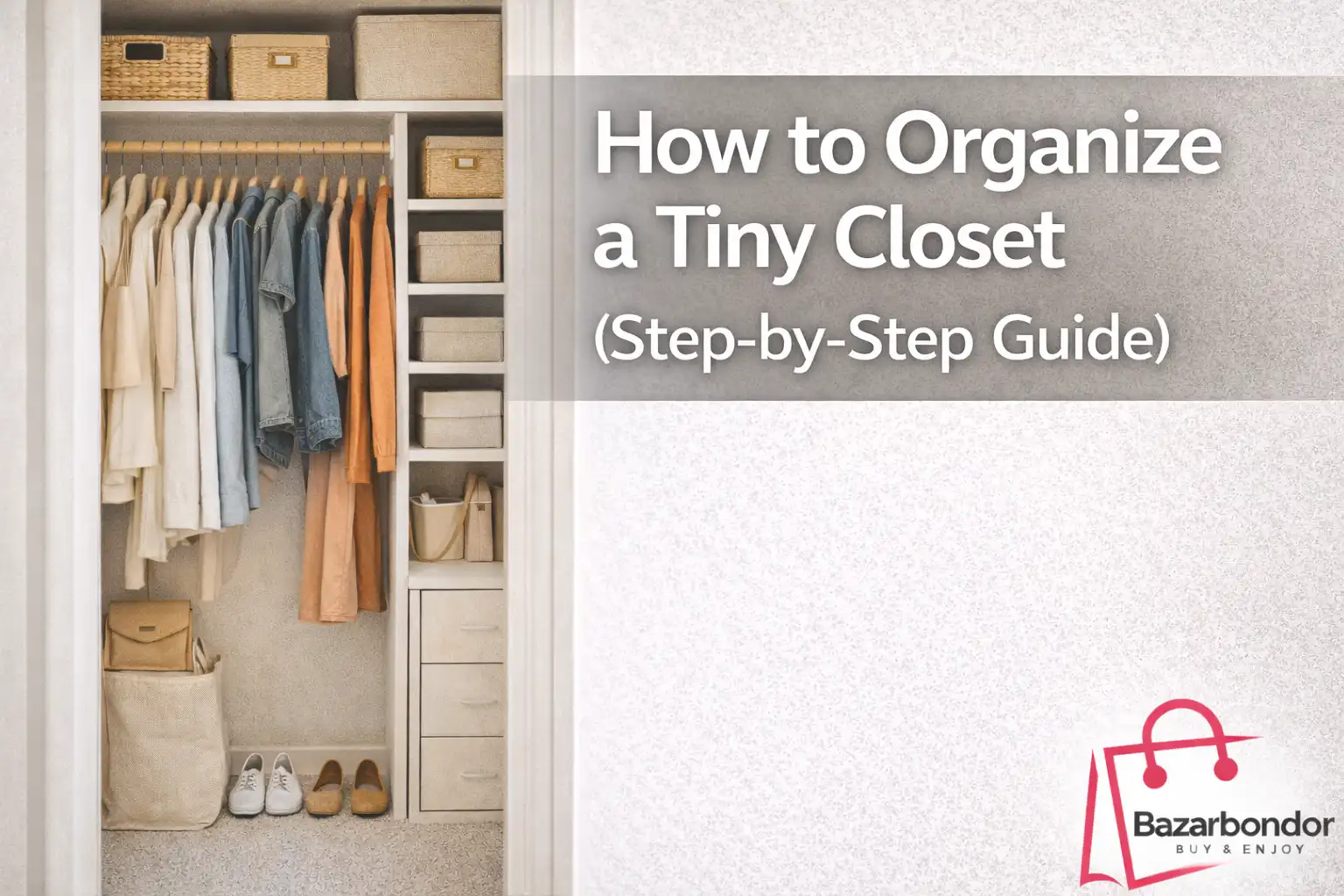
Learning how to organize a tiny closet requires ruthlessly decluttering your clothing and aggressively maximizing your available vertical space. A well-planned, functional wardrobe saves you time getting dressed every morning and prevents perfectly good clothes from getting crushed or lost.
The Frustration of a Cramped Wardrobe
Do you ever open your wardrobe doors, stare at a crammed rack of clothes, and still feel like you have absolutely nothing to wear? You push hangers aside, trying to find that one specific black shirt, only to cause an avalanche of sweaters to fall from the top shelf. I understand this frustrating scenario completely.
Over the last ten years as a professional organizer, I have helped clients transition from spacious suburban homes to tiny city apartments. I have personally lived in a shoebox-sized flat in London and a cramped studio in New York. Space is a luxury, but a messy wardrobe is simply a choice we make.
By reading this guide, you will gain a practical, actionable system to turn your chaotic small space into a streamlined, functional storage area. We will clear the clutter, find hidden space you did not know you had, and build a routine you can easily maintain. Let’s get straight into it.

3 Major Tiny Closet Problems (And How to Fix Them)
Most people dealing with small storage spaces run into the exact same roadblocks. Before we start rearranging your shelves, we need to address these core issues directly.
Problem 1: The “Nothing to Wear” Illusion
You own fifty shirts, but you only wear your favourite five. This happens because your closet is packed so tightly that you cannot physically see what you own. Clothes get pushed to the back and forgotten.
The Solution: Use the backward hanger trick. Turn all your hangers so the open end faces outward. After you wear an item and wash it, hang it back up normally. After six months, look at which hangers are still backward. These are the items you never wear. You can easily sell these untouched pieces on platforms like Poshmark in the US and Canada, or Vinted in the UK.
Problem 2: The Floor Space Black Hole
Your clothes hang fine, but the floor of your closet is a terrifying mountain of shoes, gym bags, and random boxes. It becomes impossible to step inside or find a matching pair of sneakers.
The Solution: Get everything off the floor by using over-the-door shoe organizers. If you rent an apartment in Sydney or Toronto and cannot drill holes, use heavy-duty over-the-door hooks. You can also slide shallow rolling bins under your bed. Keep your everyday shoes in the closet and move out-of-season footwear out of the way. Keeping the floor entirely clear creates the illusion of a much larger space.
Problem 3: Bulky Seasonal Gear Taking Over
Trying to store thick winter coats next to summer dresses is a recipe for disaster. Heavy Canadian winter parkas or bulky British jumpers take up valuable real estate that you need for your daily outfits.
The Solution: Vacuum storage bags are your best friend. Wash and dry your bulky out-of-season clothing, fold them neatly, and seal them in vacuum bags. You can shrink a massive pile of winter woollens down to a flat, hard block. Slide these blocks under your bed or place them on the very highest shelf in your room.
Step 1: The Great Wardrobe Purge

You cannot organize clutter. If you want to know how to organize a tiny closet effectively, you must start by reducing the volume of stuff inside it.
First, take every single item out of your closet. Yes, everything. Put it all on your bed. Your closet should be completely empty and wiped clean. Seeing the massive pile of fabric on your bed will shock you, but it is a necessary part of the process.
“Owning less is better than organizing more.” — Joshua Becker, Minimalist Author
Sort your clothing into four distinct piles: Keep, Donate, Sell, and Trash. Be brutally honest with yourself. If a piece of clothing does not fit your current body, hurts to wear, or requires constant adjustment, let it go. Your closet should only contain clothes that make you feel good right now.
Textile waste is a massive global issue. According to the United States Environmental Protection Agency, millions of tons of clothing and textiles end up in landfills each year. Do your part by donating gently used items to local charities like Goodwill in the US, the British Heart Foundation in the UK, or Vinnies in Australia.
Step 2: Maximize Every Inch of Vertical Space
Most standard closets come with one single hanging rod and one shelf above it. This setup wastes a massive amount of empty space between the bottom of your hanging shirts and the floor. You need to think vertically.
Add a double-hang closet rod. This is a simple, inexpensive tool that hooks onto your existing top rod and hangs down, providing a second horizontal bar for clothes. It instantly doubles your hanging space. Use the top rod for short items like shirts and blouses, and the bottom rod for folded trousers and skirts.
If you have dead space above your top shelf, buy clear acrylic shelf dividers. These keep stacks of folded sweaters or jeans from toppling over into each other. Stacking vertically allows you to fit more items on a single shelf while keeping everything visible and neat.
“Organization isn’t about perfection; it’s about efficiency, reducing stress and clutter, saving time and money, and improving your overall quality of life.” — Christina Scalise, Professional Organizer
If you have blank walls on the inside of your closet doors, install adhesive hooks. These are perfect for hanging belts, hats, lightweight scarves, or your daily handbag. Every blank surface is an opportunity for smart storage.
Step 3: Upgrade Your Hardware for Maximum Efficiency
The type of hangers you use drastically impacts how much fits in your small space. Mismatched, bulky plastic hangers or thick wooden hangers take up far too much horizontal room on the rod.
Swap all your old hangers for slim, non-slip velvet hangers. These are incredibly thin and prevent silky shirts or wide-neck dresses from sliding off and falling to the floor. Switching to uniform slim hangers can free up to 30% more space on your clothing rod.
Use cascading hooks for items in the same category. These small plastic or metal hooks slip over the neck of a hanger, allowing you to hang another hanger directly below it. This is highly effective for storing multiple tank tops, work blouses, or similar items in a single vertical line.
If you store folded clothes in drawers or bins inside your closet, use drawer dividers. They stop socks, underwear, and folded t-shirts from turning into a jumbled mess. You can easily find affordable bamboo or fabric dividers at local home goods stores. [INTERNAL LINK: minimalist wardrobe essentials]
Step 4: Master the Art of Folding
Hanging everything is a luxury tiny closets simply cannot afford. You must learn to fold properly to save space. Traditional flat folding, where items are stacked on top of one another, is inefficient. You have to lift the whole stack to get the shirt at the bottom, which ruins the neat pile.
Instead, switch to file folding. This technique involves folding clothes into neat, compact rectangles and standing them upright in a drawer or basket, just like files in a filing cabinet. You can instantly see every single item you own without having to dig through layers.
File folding works exceptionally well for t-shirts, jeans, workout leggings, and children’s clothing. It allows you to fit significantly more items into a single storage bin while maintaining strict order.
Keep your heavy, chunky knit sweaters folded flat on shelves. Hanging heavy knits will stretch out the shoulders and ruin the shape of the garment. Use those clear shelf dividers we discussed earlier to keep these stacks perfectly straight.
Step 5: Implement a Seasonal Rotation System
If you live in a place with distinct seasons, you cannot keep your entire wardrobe in a tiny closet all year long. A small space requires active management and regular rotation.
“Later is the best friend of clutter.” — Peter Walsh, Professional Organizer
At the start of spring, dedicate an hour to pack away your heavy winter gear. Wash everything thoroughly, fold it, and place it into under-bed storage boxes or vacuum-sealed bags. Do the exact reverse when autumn arrives, packing away your summer shorts and linen dresses.
Label your storage bins clearly. Write exactly what is inside, such as “Heavy Winter Sweaters” or “Beach Wear.” This saves you from tearing open five different boxes in November trying to find your favourite scarf.
Creating a “transition bin” is also highly effective. This is a small basket for items you are unsure about keeping. If you wear an item and feel uncomfortable, drop it in the transition bin. Once the bin is full, take it directly to a local donation centre. This prevents clutter from sneaking back onto your hangers. [INTERNAL LINK: decluttering your bedroom]
Frequently Asked Questions
How do I maximize space in a really small closet?
You maximize space by removing all out-of-season clothing and utilizing vertical storage solutions. Install a double-hanging rod to duplicate your hanging space, and use over-the-door hooks for accessories and shoes to keep the floor completely clear.
What are the best hangers for a tiny wardrobe?
Slim, non-slip velvet hangers are the absolute best choice for small spaces. They are a fraction of the thickness of standard plastic or wooden hangers, allowing you to fit significantly more clothes on a single rod while keeping items secure.
How do you store shoes in a small closet?
Avoid leaving shoes in a messy pile on the floor. Use a hanging shoe organizer that fits over the back of the closet door, or purchase a tall, narrow shoe rack that utilizes vertical space. Alternatively, keep everyday shoes near the front door and store seasonal footwear under your bed.
Should I fold or hang my jeans?
In a tiny closet, it is usually better to fold jeans to save valuable hanging space for dresses, blouses, and jackets. Use the file-folding method and stand them upright in a drawer or storage basket, or stack them neatly on a shelf using acrylic dividers.
How often should I declutter my closet?
You should aim to declutter your wardrobe at least twice a year, ideally during seasonal transitions. Doing a quick purge every six months stops unworn items from accumulating and ensures your small closet remains functional and easy to manage.
Final Thoughts on Keeping Your Closet Tidy
Learning how to organize a tiny closet is entirely achievable if you follow a logical, step-by-step approach. You do not need a massive walk-in wardrobe to have a beautiful, functional space.
Remember these three core rules for small space success:
- Purge ruthlessly: Only keep clothes that fit your body and your lifestyle today.
- Think vertically: Use double rods, over-the-door organizers, and shelf dividers to use every inch of height.
- Rotate seasonally: Pack away bulky weather-specific gear to free up breathing room for your daily outfits.
A tidy closet reduces morning stress, helps you appreciate the clothes you own, and makes your entire bedroom feel calmer. Grab a few trash bags for donations, put on your favourite playlist, and start clearing out that space today. You have the tools, so go make it happen.

“I believe your home should tell your story, not your bank account statement.”
Hi, I’m Benjamin Harrison. I grew up in a small town in Ohio, helping my dad refinish old furniture in the garage, and that’s where my love for home decor began. After years of working as a set designer, I realized my real passion was helping everyday people fall in love with their homes again. Here on my blog, I share easy DIY projects, budget-friendly room makeovers, and tips on how to find hidden gems at thrift stores. When I’m not rearranging my own living room for the tenth time, I’m probably drinking coffee on my porch in Charleston with my wife and our golden retriever.