
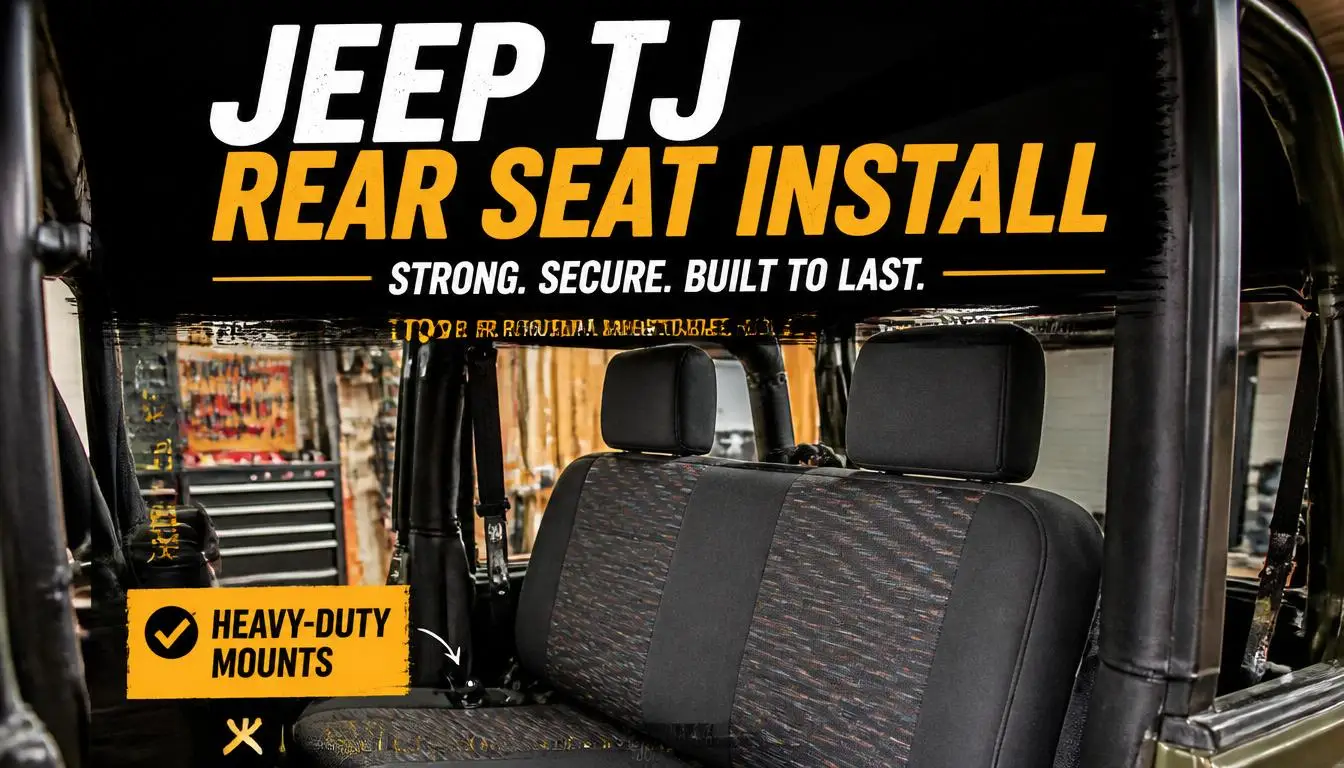
Jeep Wrangler TJ rear seat installation means fitting the correct rear bench, mounting brackets, pins, bolts, and seat belt hardware into the factory rear floor locations. It matters because a loose or mismatched rear seat can rattle, fail inspection, lower resale value, and put passengers at real risk.
Jeep Wrangler TJ Rear Seat Installation Made Easy With Essential Mounting Brackets sounds simple until you are staring at bare floor holes, missing latch pins, rusty bolts, and a rear bench that almost fits.
The good news is that this job is manageable when you know what belongs there. A used rear seat without brackets is just a heavy cushion. A bracket kit without the correct latch hardware is another delay. This guide shows the parts, checks, costs, install steps, safety issues, and inspection points that matter.
3 Common Pain Points With TJ Rear Seat Installation
1. Buying a Rear Seat Without the Right Brackets
The biggest mistake is buying a used TJ rear seat because the price looks good, then finding out the brackets are gone. Many Jeep owners remove the rear seat for camping gear, dogs, or cargo drawers. Years later, the seat gets sold without floor mounts.
This happens often on older 1997–2006 Wrangler TJ models. The TJ generation covers model years 1997 to 2006, so age and previous owner changes matter before you order parts.
Simple fix: ask for photos of the underside of the seat, side latch areas, and floor brackets. You want the rear seat, side mounting brackets, latch pins, bolts, and working belts. If any are missing, lower your offer.
I once looked at a 2002 Wrangler Sport listed as ready for family use. The rear bench was sitting in place but not bolted down. The seller called it removable. I called it unsafe.
2. Confusing 1997–2002 and 2003–2006 Hardware
A TJ is a TJ, but rear seat hardware can vary by year, seat style, and whether you have a standard TJ or longer Unlimited model. The bolt holes may look close, but close is not good enough for passenger seating.
Some aftermarket listings separate rear seat mounting hardware by 1997–2002 and 2003–2006 fitment. Match parts by model year, seat type, and body style. If you buy from eBay, Marketplace, AutoTrader UK parts ads, Kijiji Autos listings, or Jeep breakers, ask for the donor Jeep year.
3. Treating Seat Belts as an Afterthought
The brackets hold the seat. The seat belts protect the person. Both must be correct. A rear seat with no usable belts should not carry passengers on the road.
NHTSA identifies seating systems, occupant crash protection, seat belt assemblies, seat belt anchorages, and interior material flammability as relevant standards for seats and restraints. It also says aftermarket seat belts need to comply with Standard No. 209, while seat belt anchorages are covered under Standard No. 210 for new vehicles.
Simple fix: inspect the belts, buckles, anchor points, webbing, and bolts before anyone rides in the back. If belts are frayed, stuck, missing, or bolted to weak sheet metal, stop and get proper parts or professional help.
“Wearing a seat belt is one of the easiest and most effective ways to prevent injury and death in a vehicle crash.” — Adam Raviv, Chief Counsel, NHTSA
What You Need for a Proper Jeep Wrangler TJ Rear Seat Installation
A clean Jeep Wrangler TJ rear seat installation starts with the right parts. Do not rely on the seat alone. The mounting system is what makes the seat usable.
Confirm these parts before you start:
- Rear bench seat or fold-and-tumble rear seat
- Left and right floor mounting brackets
- Side latch brackets or striker brackets
- Correct bolts, nuts, washers, and latch pins
- Rear seat belt buckles and belt assemblies
- Factory-style anchor bolts
- Basic hand tools and penetrating oil
The exact mix depends on your model year and whether the Jeep had a rear seat from the factory. Some base or modified Jeeps may have missing trim, old cargo hardware, or damaged threads in the rear floor.
A used OEM setup is often the cleanest path. Aftermarket brackets can work, but I only trust them when the listing gives clear fitment, hardware grade, and return support.
How to Check Your TJ Before Ordering Brackets
Before I order any parts, I remove the rear carpet or cargo mat and inspect the tub. This can save a week of wrong orders.
Look for threaded holes, old bolt marks, rust bubbles, broken bolts, and cracked metal. A rusty tub with drilled holes from a homemade cargo box needs more care.
Then check the wheel well area and side latch points. The rear seat needs to lock in place. If the seat can bounce, shift, or tip, it is not ready for passengers.
Use this quick check:
- Floor holes: Make sure the mounting points are present and not stripped.
- Tub condition: Surface rust is manageable, but soft metal is a safety problem.
- Seat frame: Check for bent tubes, cracked welds, and damaged latch hooks.
- Belts: Pull each belt fully out and let it retract.
- Buckles: Make sure the latch clicks and releases smoothly.
- Hardware: Replace rounded, rusty, or unknown bolts.
In the UK, an MOT tester can fail unsafe seat or belt mounting concerns. GOV.UK guidance says a seat belt anchorage prescribed area includes seat mounting points where a belt attaches to a seat frame, and belt anchorages should be secured to strong structural members rather than thin sheet metal.
In Ontario, a Safety Standards Certificate confirms the vehicle met minimum safety standards on the day it was issued, so a loose rear seat can become a sale or registration problem.
Step-by-Step Jeep Wrangler TJ Rear Seat Installation Made Easy
This is the basic process I use on a normal TJ with factory mounting locations. If your tub has been modified, repaired, or heavily rusted, have a mechanic or fabrication shop inspect it first.
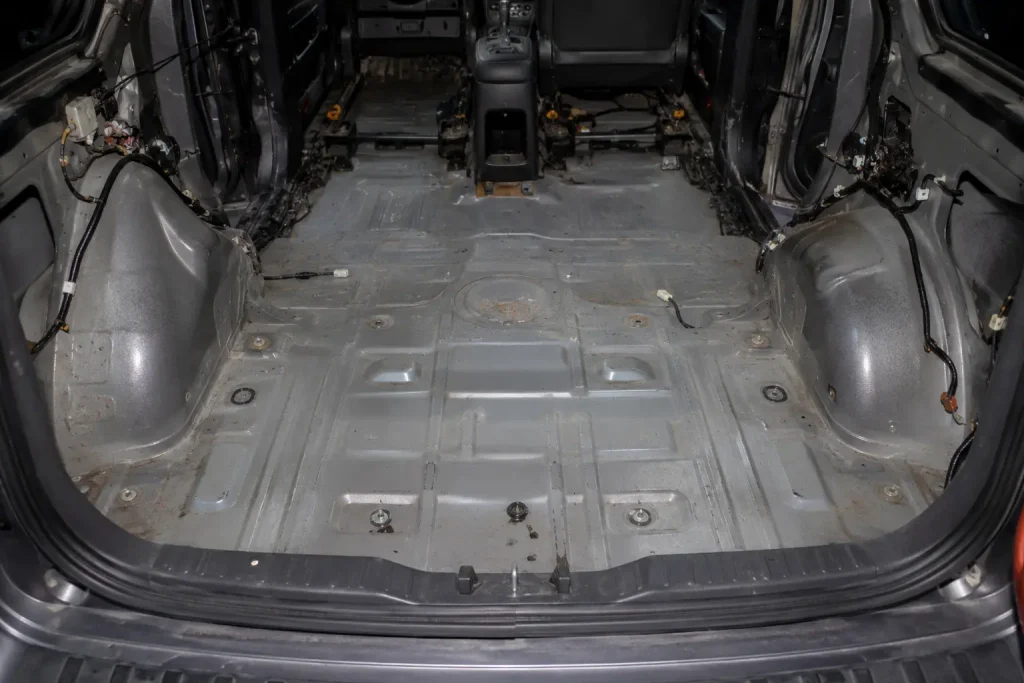
Step 1: Clean the Rear Tub
Remove carpet, mats, cargo trays, and old brackets. Vacuum the floor and inspect every mounting hole. Spray rusty bolts with penetrating oil and let them sit. If a bolt snaps inside the floor, do not rush. Poor drilling can damage the threads.
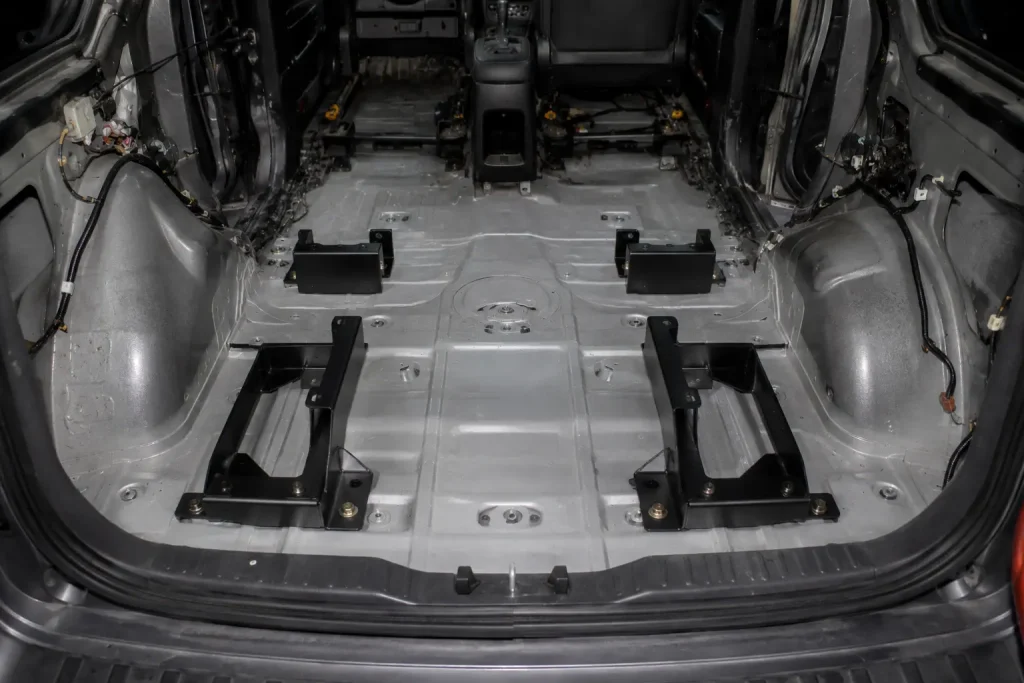
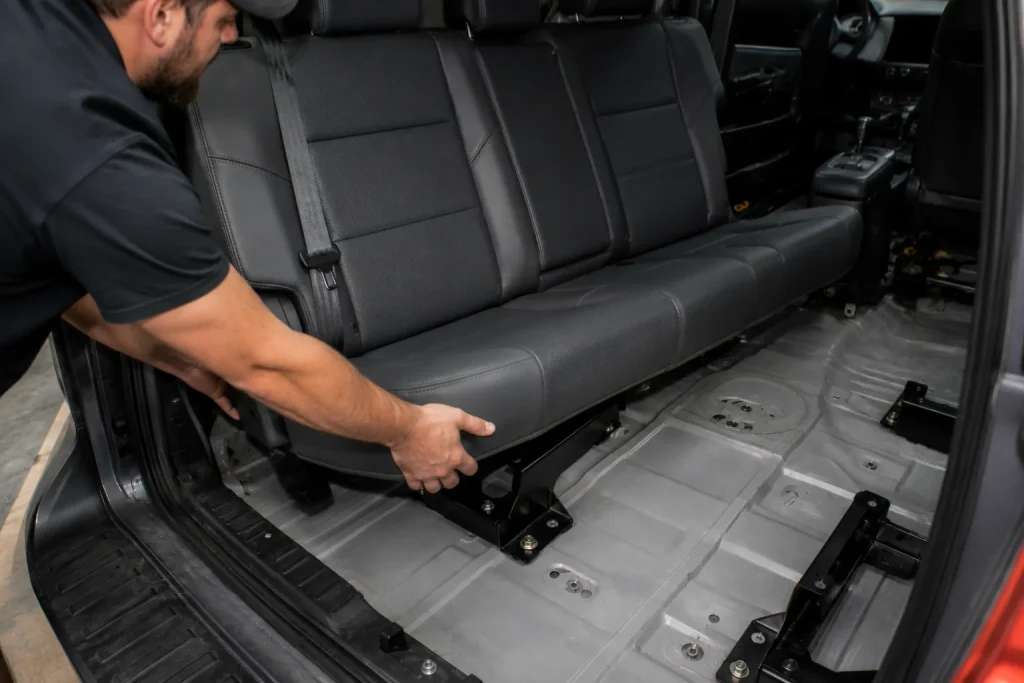
Step 2: Test-Fit the Brackets
Make sure the holes line up cleanly. If you need to force the bracket sideways, stop and confirm the part number.
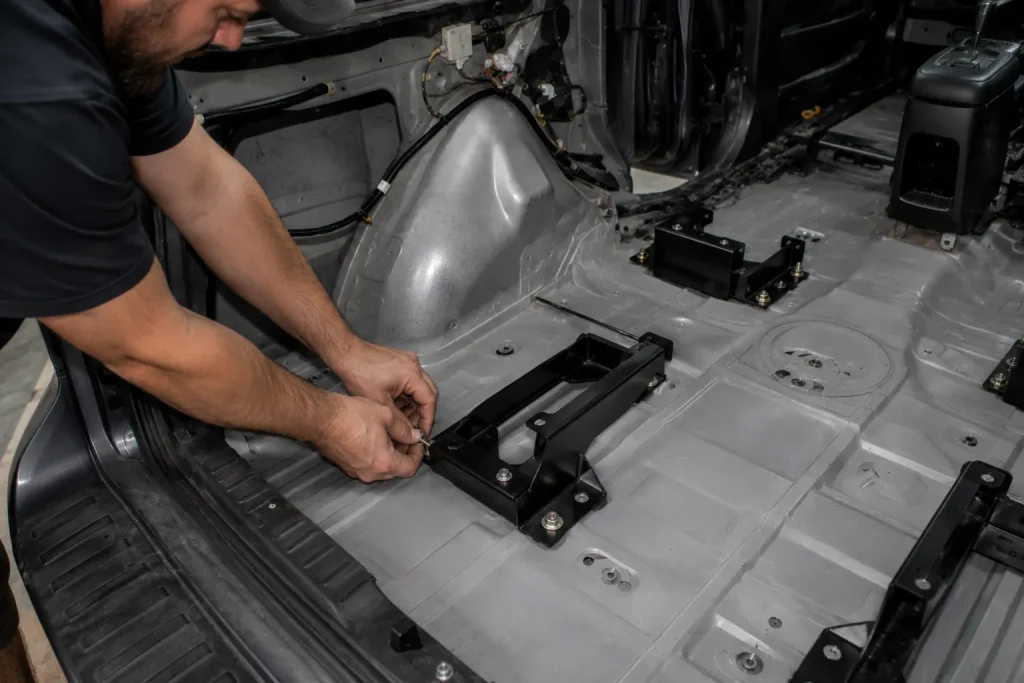
Step 3: Install Hardware by Hand First
Start every bolt by hand. Cross-threading a floor bolt is one of the easiest ways to turn a simple job into a repair. Tighten the bolts evenly and use the factory service manual torque value for your model year. I do not guess torque on seat brackets because the part is tied to passenger safety.
Step 4: Set the Rear Seat Into the Brackets
Lift the seat into place with a helper if possible. Hook the rear seat into the mounting points and lower it into position. The latch should lock without hammering, bending, or forcing.
Step 5: Install and Check Seat Belts
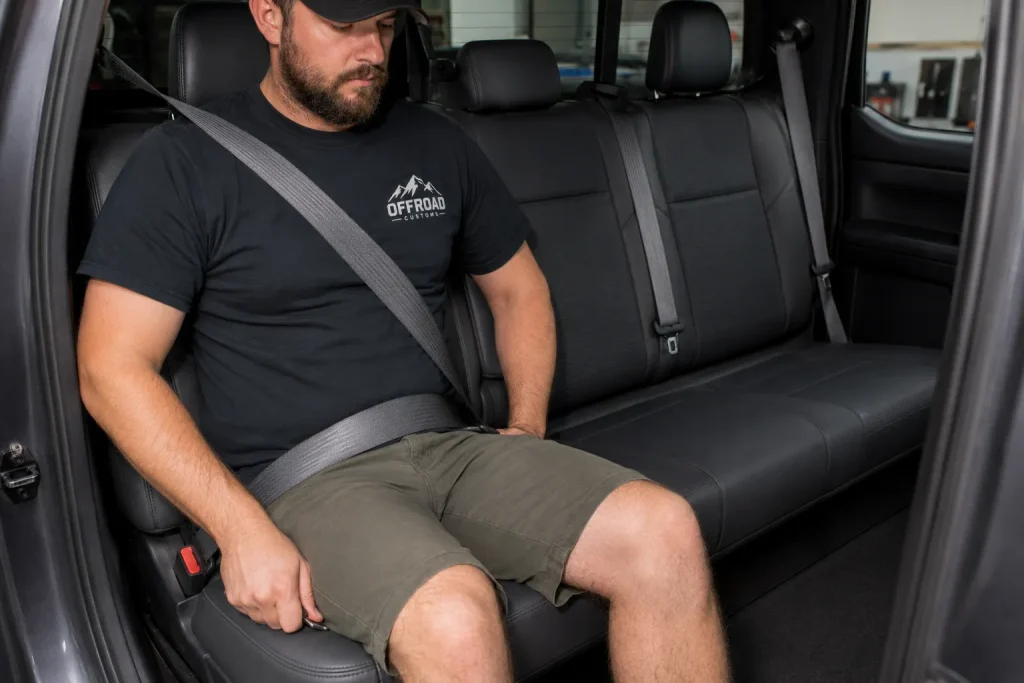
Install the buckles and belts using correct anchor points and hardware. Keep belts free from twists. Pull the belts sharply to confirm the locking function. Then sit in the rear seat and buckle up. The belt should sit flat and the buckle should release cleanly.
Step 6: Do a Shake Test
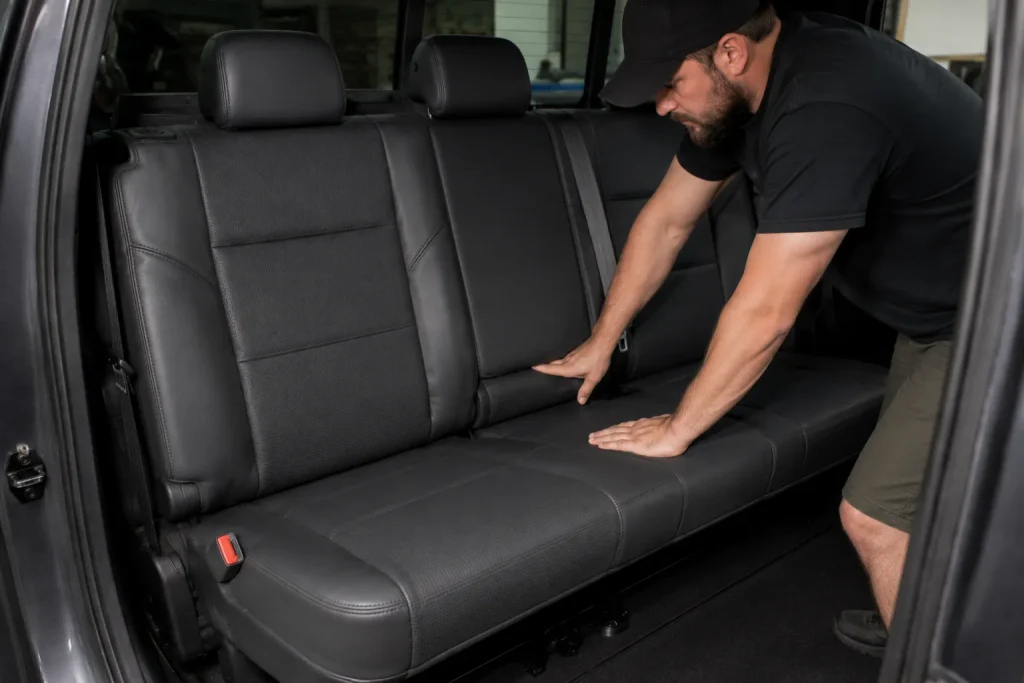
Grab the seat frame and pull hard in every direction. The seat should not clunk, lift, or slide. Fold and tumble it if your seat has that function, then lock it back down and test again. Recheck the bolts after the first short drive.
Cost Breakdown and Money-Saving Tips
Jeep rear seat costs vary because TJ parts are old, popular, and often sold used. Marketplace listings recently showed TJ rear seat bracket hardware around USD $40–$90 before shipping, while specialty Jeep retailers list some TJ seat mounting hardware at higher prices depending on part type and year.
| Item | USA | UK | Canada | Australia |
|---|---|---|---|---|
| Used rear seat only | $150–$350 | £120–£300 | CAD $220–$500 | AUD $250–$600 |
| Bracket and hardware kit | $45–$150 | £45–£130 | CAD $80–$220 | AUD $90–$260 |
| Used OEM belts and buckles | $60–$180 | £50–£160 | CAD $90–$260 | AUD $110–$300 |
| Shop labor, if needed | $100–$250 | £90–£220 | CAD $140–$350 | AUD $160–$400 |
The cheapest setup is not always the best value. A complete used OEM seat with brackets, pins, and belts may cost more upfront, but it saves time.
My buying rule is simple: if I cannot see the brackets, belts, and latch points in the photos, I assume they are missing. That keeps me from overpaying.
You can save money through Jeep breakers, local 4×4 groups, and part-out sellers. In Australia, local pickup can matter more than the list price.
DIY vs Professional Help
A clean bracket install on a rust-free TJ is a reasonable DIY job for a careful owner. You need patience, correct parts, and basic tools.
DIY makes sense if your Jeep still has factory mounting holes, the tub is solid, you have matching brackets, and the seat belts mount to factory points.
Professional help makes sense if the floor is rusty, old bolts are broken, someone drilled custom holes, or you are adding belts where none were fitted.
In Australia, seating changes can require inspection or certification depending on the state and the type of change. South Australia advises owners to contact Vehicle Standards before seating alterations and inspections, which is smart advice even outside SA because rules vary by state.
For a Jeep used off-road, I also ask the shop to inspect the rear tub, body mounts, and belt anchor areas. Mud and water sit under carpet. A floor can look fine from above and be weak from below.
Safety Checks Before Anyone Rides in the Back
A TJ is a short-wheelbase 4×4, not a modern family crossover. That means the install needs respect.
IIHS says newer vehicle advances were often applied in the front seat first, and its updated moderate overlap test added a second-row dummy to increase focus on rear passenger safety. It also states the second row remains the safest position for children under 13, regardless of a vehicle rating in that updated test.
“There’s still progress to be made, but these results show that manufacturers are working hard to make their vehicles as safe for back seat passengers.” — David Harkey, President, Insurance Institute for Highway Safety
Before using your newly installed TJ rear seat, run this safety checklist:
- Seat locks firmly into both brackets.
- Bolts are tightened to the correct factory spec.
- Belts are not frayed, cut, sun-baked, or twisted.
- Buckles release cleanly.
- Seat frame has no cracks or broken welds.
- Rear cargo cannot hit passengers during braking.
- Child seats are checked by a certified technician if children will ride there.
NHTSA also finalized a rule requiring rear-seat belt warning systems on new vehicles from September 1, 2027, which shows how much attention regulators are giving rear passenger belt use. That rule does not retrofit your TJ, but it does reinforce the same point: rear passengers need working restraints.
Before I spend real money on any used Jeep, I also run the VIN through NHTSA’s recall lookup because it can show unrepaired safety recalls tied to that specific vehicle.
Child Seats, Boosters, and Family Use
A Jeep Wrangler TJ rear seat installation is not the same as making the Jeep ideal for babies or small children.
Older TJs may lack the easy child-seat features you are used to in a Honda CR-V, Toyota RAV4, or newer Jeep Grand Cherokee. Space is tight. Seatbacks are upright. Rear access can be awkward with a two-door body.
Cars.com has warned about Wrangler child-seat fit issues in newer models too, including head restraint and booster fit concerns. Its 2016 Wrangler car-seat check also noted floppy rear belt buckles that can be hard for children to grasp.
“If you plan to put kids in back, be careful with forward-facing car seats and high-back boosters.” — Jennifer Geiger, News Editor and Certified Child Safety Seat Installation Technician, Cars.com
If children will ride in the TJ, do not rely on guesswork. Have the seat checked by a certified child passenger safety technician in the USA or the local equivalent in your country. In Canada, Transport Canada warns that many third-party aftermarket products added to child seats can create safety risk, so avoid add-ons that did not come from the child-seat maker.
What to Avoid During Installation
The fastest way to ruin this job is to make it fit with random hardware. I have seen wood screws, hardware-store bolts, missing washers, and belts mounted through thin panels. None of that belongs in a passenger seating area.
Avoid these mistakes:
- Using bolts with unknown grade or length
- Drilling new holes without reinforcement
- Mixing YJ, TJ, LJ, and JK brackets
- Installing belts to weak metal
- Ignoring rust around the mounting points
- Buying a seat because it is cheap but incomplete
- Letting passengers ride before the shake test
A rear seat is part of the vehicle safety system. If your repair changes belt mounting or seat structure, bring in a qualified mechanic, engineer, or inspection shop.
Resale Value and Maintenance After Installation
A complete rear seat can help resale value, especially for buyers who want a Jeep for friends, pets, or occasional family use. A missing rear seat can make a TJ look like a trail-only rig, even when the rest of the Jeep is clean.
On AutoTrader UK, Carsales AU, Kijiji Autos CA, and CarGurus USA, buyers notice details. A TJ with a clean interior, working belts, service history, and complete rear seat setup feels better than one with loose parts in the cargo area.
After installation, keep the area clean and checked. Every few months, fold the seat, vacuum under it, and check the brackets. After off-road trips, inspect the latch points because mud can dry around moving parts and stop the seat from locking cleanly.
This is also a good time to check tyre safety, brake condition, OBD diagnostics, frame rust, auto insurance notes, and service history. A clean rear seat install is great, but the whole Jeep still needs to be roadworthy.
Frequently Asked Questions
Can I install a rear seat in a Jeep Wrangler TJ myself?
Yes, you can if your TJ has solid factory mounting points and you have the correct brackets, bolts, pins, and belts. Use the factory service manual for torque specs. If the floor is rusty, drilled, or repaired, get a mechanic to inspect it first.
Do all Jeep Wrangler TJ rear seats use the same brackets?
No. Bracket fitment can vary by year, seat design, and body style. Always match the rear seat and mounting brackets to your Jeep year and confirm with photos or part numbers before buying.
Is a TJ rear seat safe for passengers?
It can be safe when installed with correct hardware, solid mounting points, and working seat belts. It is not safe if the seat is loose, the belts are missing, or the anchor points are rusty. Always test the seat before carrying passengers.
Can I add seat belts if my TJ does not have them?
You may be able to, but this is not the place for guesswork. Seat belt anchor points must be strong and correctly located. If your Jeep lacks proper anchors, use professional help and check local rules before road use.
Will installing a rear seat affect inspection or registration?
It can. In the UK, MOT rules cover seat belt anchorage condition and related seat mounting areas. In Australia and Canada, roadworthy or safety certificate rules vary by state or province. In the USA, state inspection rules vary, so check locally.
Conclusion
Jeep Wrangler TJ Rear Seat Installation Made Easy With Essential Mounting Brackets comes down to three things: buy the right parts, mount them to solid factory points, and treat seat belts as a safety system.
Do not let a missing bracket kit turn your TJ into a guessing project. Check the year, inspect the tub, use proper hardware, and get professional help when rust or belt anchor points are involved.
Once the rear seat locks down tight and the belts work correctly, your TJ becomes more useful, more buyer-friendly, and more enjoyable for the people riding with you.

“Cars aren’t just machines. They’re freedom, memory, and a little bit of grease under your fingernails.”
I’m Theodore Roosevelt—though my friends just call me “Ted” (and no, I’m not related to the president, though I do share his love for adventure). I grew up in Detroit in the 1970s, back when the city was still the heart of the American auto industry. My first love was a rusted-out 1967 Mustang my father and I rebuilt in our garage when I was fifteen. That project taught me that cars have souls. After spending twenty years as a mechanic and another ten writing for magazines, I started this blog to help everyday drivers and weekend wrenchers feel confident under the hood. Whether you’re restoring a classic or just trying to keep your daily driver alive for one more winter, I’m here to help you get there.