
Image source: Bing (Web (fair-use with source credit))
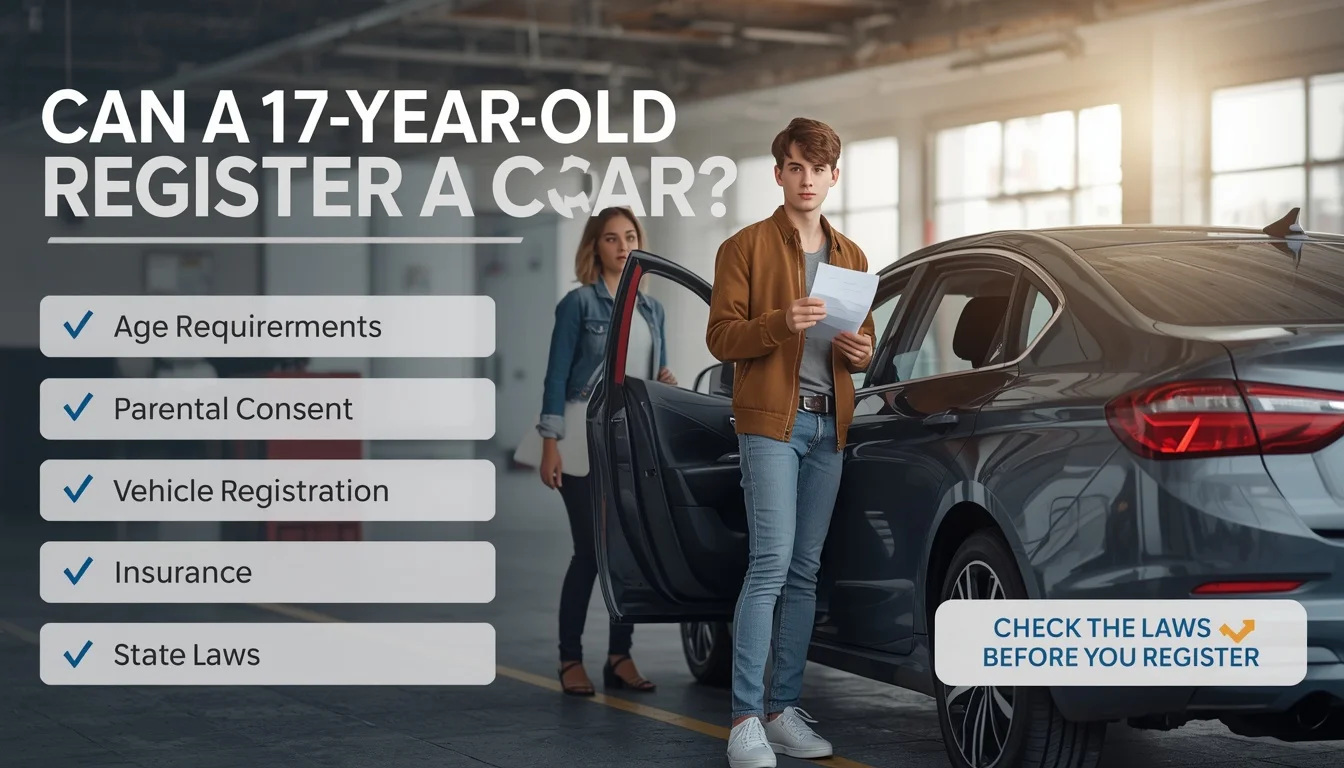
Can a 17-year-old register a car in their name? Yes, but only in certain states and under specific conditions. Most states require you to be 18 to sign binding contracts like vehicle registration.
However, some states allow minors to register vehicles if they are emancipated, married, or have a parent co-sign.
As of 2026, 42 states set the age of majority at 18, meaning you cannot legally enter contracts alone until then. This directly affects your ability to register a car without adult involvement. Let’s break down exactly how this works across different situations.
Quick Answer: Can a 17-Year-Old Register a Car in Their Name?
Yes, but only if you live in a state that allows minor registration or you qualify for an exception. You must be emancipated, married, or an active military member to register independently. Otherwise, a parent or guardian must co-sign the title and registration.
Most states require you to be 18 to hold a vehicle title alone. The exact rules depend entirely on your state’s motor vehicle laws and your legal status.
The Core Issue: Why Age Matters for Vehicle Registration
Vehicle registration is a legal contract between you and your state’s motor vehicle agency. Because you are a minor, most states consider you unable to sign that contract until you reach the age of majority, which is typically 18. This isn’t about car ownership.
It’s about legal capacity.
States view minor vehicle registration through two main lenses. First, they look at whether you can enter a binding financial agreement. Second, they check if you have legal independence from parents or guardians.
If you cannot do either, you usually cannot register a car alone.
| Term | What It Means for You |
|---|---|
| Emancipation | Legal status where a minor is treated as an adult for most contracts. |
| Co-signer | A parent or guardian who signs with you and shares financial responsibility. |
| Title | Document proving ownership. Usually placed in the registered owner’s name. |
| Age of Majority | The age (usually 18) when you gain full contractual rights. |
You might wonder why these rules exist. They protect both you and lenders. Registration ties to insurance, loans, and liability.
If you cannot be held legally responsible for payments or damages, the state will not let you register a vehicle in your own name.
In practice, this means you must follow one of three paths. Qualify for independent registration, use a parent as a co-signer, or wait until you turn 18. Your options depend heavily on where you live and your personal circumstances.
Understanding these basics will help you decide which path fits your situation.
Decision Branch #1: What State Are You In?
Your state’s laws are the single biggest factor in whether you can register a car at 17. States fall into three broad categories based on how strictly they enforce age requirements for vehicle registration.
Flexible States
These states allow minors to register vehicles if they meet certain conditions. Common requirements include being emancipated, married, or having a parent co-sign.
- California: Allows minors to register if married, emancipated, or with a parent co-signer.
- Texas: Permits minors to register with parental consent and co-signature.
- Florida: Requires a parent or legal guardian to co-sign the registration application.
- New York: Allows registration with a co-owner who is at least 18.
Moderate States
These states do not explicitly ban minor registration but make it difficult in practice. You may still need a co-signer, and the DMV might reject your application if you cannot prove independent income or legal emancipation.
- Illinois: Minors can register if they provide proof of emancipation or parental consent.
- Ohio: Requires a co-owner who is 18 or older for any minor-registered vehicle.
- Georgia: Allows minor registration with a notarized parental consent form.
Restrictive States
These states outright prohibit anyone under 18 from registering a vehicle, regardless of emancipation status. Your only realistic options are to register the car in a parent’s name or wait until you turn 18.
- Alabama: No minor registration allowed. Must be 18 or have a co-owner.
- Michigan: Minors cannot hold title or registration without an adult co-owner.
- Pennsylvania: Requires the applicant to be at least 18 years old.
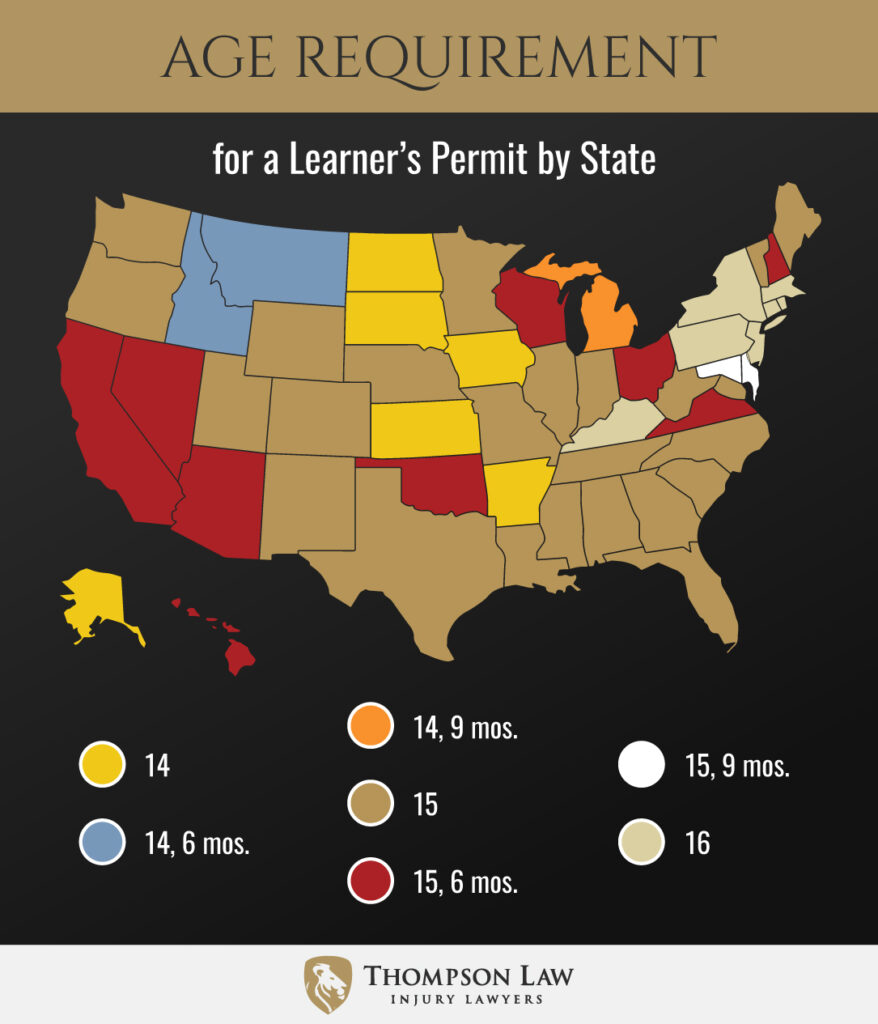
Image source: Bing (Web (fair-use with source credit))
To find your exact state rules, visit your Department of Motor Vehicles website or call their customer service line. Many states publish age-related requirements directly in their vehicle codes. For example, California’s DMV guidance outlines the specific forms needed for minor registration.
You should also check whether your state requires a physical presence at the DMV or allows online registration. Some states let parents complete the entire process digitally, while others mandate an in-person appointment. Knowing this in advance saves time and avoids frustrating trips.
Decision Branch #2: Are You a Dependent or Emancipated Minor?
Even in states that allow minor registration, your legal status matters enormously. Most 17-year-olds are considered dependent minors, meaning their parents or guardians are legally responsible for them. Emancipation changes that dynamic by granting you adult-like rights before turning 18.
What Emancipation Actually Means
Emancipation is a court-ordered legal status that frees a minor from parental control and grants them the right to enter contracts independently. It is not automatic and varies by state. Some states recognize partial emancipation for specific purposes like medical decisions or educational choices.
- Full emancipation: You can sign leases, take out loans, and register vehicles without parental involvement.
- Partial emancipation: You gain certain adult rights but not all. Vehicle registration may still require a co-signer.
- Statutory emancipation: Automatic eligibility if you are married, in the military, or living independently with parental consent.
How to Prove Emancipation Status
If you are emancipated, you will need to provide official documentation to the DMV. Acceptable proof varies by state but typically includes:
- A court decree of emancipation issued by a family or probate court.
- A marriage certificate if you are legally married.
- Military discharge papers if you are an active service member.
- A notarized statement from a parent or guardian consenting to your independence.

Image source: Web (Bing) / attorneys.media (Web image (fair-use with source credit))
Without proper documentation, the DMV will treat you as a dependent minor. That means you must use a co-signer or register the vehicle under an adult’s name. Attempting to misrepresent your status can lead to registration denial, fines, or even fraud charges.
Special Cases: Married Minors and Active Military
Some states automatically grant registration eligibility to minors who are married or serving in the armed forces. These exceptions recognize that such individuals already handle adult responsibilities like housing, finances, and legal obligations.
- Married minors: Many states consider marriage as de facto emancipation for vehicle registration.
- Active military: Federal law and most state statutes exempt service members from age restrictions.
If you fall into either category, contact your local DMV office to confirm the required paperwork. Usually, you will need your marriage license or military ID along with your standard identification documents.
The Straightforward Path: When Registration at 17 Is Possible
If you live in a flexible state and meet the emancipation or consent requirements, you can register a car entirely on your own. This path gives you direct ownership, simplifies insurance, and builds your credit history. Just follow every step correctly.
Eligibility Checklist
Before you visit the DMV, verify that you satisfy all of the following conditions:
- You are at least 17 years old (some states allow 16-year-old registration with extra steps).
- You are legally emancipated, married, or an active-duty service member.
- You have a parent’s notarized consent if your state permits dependent-minor registration.
- You possess a valid state-issued photo ID or passport.
- You have proof of residency (utility bill, lease agreement, or school records).
- You have secured auto insurance that meets your state’s minimum coverage requirements.
Step-by-Step Registration Process
Once you confirm eligibility, follow these steps to complete the registration:
- Gather all required documents, ID, proof of residence, emancipation paperwork (if applicable), and insurance declarations.
- Obtain a title application, Download Form REG 256 (California) or your state’s equivalent from the DMV website.
- Complete the application, Fill in vehicle details, your information, and the purchase price. Have a parent or notary sign where required.
- Submit payment, Pay registration fees, sales tax, and any title transfer costs. Fees vary widely by state and vehicle value.
- Receive temporary plates, The DMV will issue a temporary registration permit valid for 30 to 90 days.
- Get permanent plates and title, Within two weeks, you will receive your new license plates and the official title in your name.
Timeline Expectations
Processing times depend on your state and whether you apply online or in person. Online applications often take 5 to 10 business days. In-person visits may yield same-day registration if the DMV has enough staff.
- Fast states: Arizona, Colorado, and Utah process online applications within 3 to 5 days.
- Slow states: New York and Illinois can take 2 to 3 weeks due to high demand.
- Rush options: Some states offer expedited processing for an additional fee.
Real-World Approval Scenarios
Consider these examples to see how the straightforward path works in practice:
- Scenario A: Maya, 17, lives in Texas and is emancipated. She brings her court decree and parent’s consent form to the DMV. The agent approves her application immediately. She receives temporary plates that day and permanent plates within a week.
- Scenario B: Leo, 17, lives in California and is married. He provides his marriage certificate and insurance binder. The DMV processes his registration in two days. He pays $150 in fees and taxes.
- Scenario C: Chloe, 17, lives in Florida and is not emancipated. Her mother co-signs the registration application. Both Chloe and her mother must be present at the DMV. Registration takes one business day.
If your situation matches any of these patterns, you should proceed confidently. The key is having the right documents and understanding your state’s specific rules.
The Most Common Route: Parent Co-Signer Arrangement
Most 17-year-old drivers never register a car independently. Instead, they use a parent or legal guardian as a co-signer on both the registration and the title. This approach is simpler, faster, and avoids the legal hurdles of emancipation.
How Joint Registration Works
When a parent co-signs, the vehicle is typically titled in both names. The DMV considers the parent the primary legal owner, while you are recognized as an authorized user. This setup satisfies state age requirements because an adult is party to the contract.

Image source: Bing (Web (fair-use with source credit))
The co-signer’s name appears on the title, registration, and insurance policy. You will drive the car regularly, but legally the parent owns it. This arrangement also makes the parent financially responsible for any loans, fees, or liabilities tied to the vehicle.
Pros and Cons of Using a Parent’s Name
Advantages:
- Registration is quick and straightforward.
- No need for emancipation paperwork.
- Insurance premiums may be lower if the parent adds you to their existing policy.
- Parents often have better credit, securing more favorable loan terms.
Disadvantages:
- You do not build personal credit history through vehicle ownership.
- The parent controls the title and can revoke your driving privileges.
- Liability falls on the parent if you cause an accident.
- Transferring ownership later can be complicated.
Liability Distribution Between Teen and Co-Signer
Understanding who is liable for what is crucial. In a co-signed arrangement, the parent is primarily liable for:
- Loan repayments if the vehicle is financed.
- Registration and insurance fees.
- Damages from accidents if they are listed as the primary insured.
- Traffic violations and points assessed against the vehicle.
You, as the primary driver, remain personally liable for:
- Your driving record and any points from violations.
- Uninsured damages if your insurance is insufficient.
- Reimbursement to your parent if you breach any private agreements.
Realistic Cost Breakdown for Co-Signed Registrations
Costs vary by state and vehicle value, but here is a typical estimate for a $10,000 used car in a moderate-cost state:
| Fee Type | Estimated Amount |
|---|---|
| Title transfer | $50–$150 |
| Registration (annual) | $100–$250 |
| Sales tax (varies) | 4–8% of purchase price ($400–$800) |
| Insurance (monthly) | $150–$300 for teen added to parent’s policy |
| Loan origination (if financed) | 1–3% of loan amount |
Total upfront costs usually range from $700 to $1,200, plus ongoing monthly insurance payments. Compare this to independent registration, where you might pay higher insurance rates but avoid sharing ownership.
When This Option Makes the Most Sense
A parent co-signer arrangement works best when:
- You want immediate access to a vehicle without waiting until 18.
- Your state has restrictive minor-registration laws.
- Your parent has strong credit and can secure a low-interest loan.
- You plan to keep the car for only a few years before transferring ownership.
If any of these conditions apply, discuss the arrangement openly with your parent. Make sure both parties understand the financial and legal responsibilities involved. Written agreements can prevent misunderstandings later.
Alternative Ownership Structures Worth Considering
If the standard parent co-signer route doesn’t fit your situation, other ownership structures may work better. These alternatives give you more flexibility while still satisfying state registration requirements.
Joint Title With a Parent or Guardian
Joint title means both you and a parent are listed as owners on the vehicle title. This setup offers several advantages:
- Shared responsibility: Both parties have equal say over selling, refinancing, or gifting the vehicle.
- Insurance benefits: You can often be added to a parent’s policy as a named owner, reducing premiums.
- Easier transition: When you turn 18, transferring full ownership is simpler than starting from scratch.
To set up joint title, your parent and you must both appear at the DMV (or submit notarized signatures if your state allows online processing). The DMV will issue a single title listing both names, typically with “AND” or “OR” between them.
- “AND” means both owners must sign for any future transaction.
- “OR” means either owner can act independently, offering more flexibility.
Trust-Based Arrangements for Family Vehicles
Some families use revocable living trusts to hold vehicle titles until the teen reaches adulthood. This approach is less common but useful when:
- Parents want to retain full control until the child turns 18.
- The vehicle is part of an estate plan with specific distribution terms.
- Multiple children share access to the same vehicle.
A trust requires creating a legal entity, naming a trustee (often a parent), and titling the vehicle in the trust’s name. While this adds complexity, it provides clear legal protection and avoids some co-ownership disputes.
Lease vs. Purchase Considerations for Minors
Leasing a vehicle as a minor is significantly harder than purchasing one. Here’s why:
| Factor | Purchase | Lease |
|---|---|---|
| Credit requirement | Can use co-signer’s credit | Requires strong credit history |
| Age restrictions | More flexible with co-owner | Nearly impossible under 18 |
| Mileage limits | None | Strict annual limits (10K–15K miles) |
| Wear-and-tear fees | None | Charges for excess wear |
| End-of-term options | Keep, sell, or trade | Return, buy out, or lease new |
Most leasing companies require applicants to be at least 18 with established credit. Some rare cases allow minors with parent co-signers, but options are limited. Purchasing a used car with cash or a co-signed loan remains the more realistic path for teens.
Adding a Teen as an Authorized Driver Versus Registered Owner
Understanding the difference between being an authorized driver and a registered owner matters enormously.
- Authorized driver: Listed on someone else’s insurance policy but not the title or registration. You can drive the car, but you don’t own it.
- Registered owner: Name appears on the title and registration. You have legal ownership rights and responsibilities.
Many parents choose to keep the title in their name while adding their teen as an authorized driver. This simplifies insurance and keeps the parent in control, but it also means the teen builds no ownership equity.
If you plan to keep the vehicle long-term or eventually buy your own car, pushing for joint title or full registration in your name (with co-signer) is worth discussing early.
Hidden Costs Beyond Registration Fees
Registration fees are only the beginning. Several hidden costs can catch young drivers and their families off guard if they don’t plan ahead.
Insurance Premium Differences for Teen-Owned Vehicles
Insurance is where most teens and parents feel the real financial sting. Rates depend on several factors:
- Age: Drivers under 25 face higher premiums regardless of gender.
- Gender: In most states, male teens pay 20, 30% more than female teens.
- Location: Urban areas with higher accident rates cost more to insure.
- Vehicle type: Sports cars and high-theft models carry steeper premiums.
- Driving record: Even one ticket can spike rates by 25, 40%.
On average, adding a 17-year-old to a parent’s policy increases monthly premiums by $150 to $300. A standalone teen policy can cost $300 to $600 per month.
Why Being on the Policy Changes Everything
If the vehicle is registered in a parent’s name, you must be added to their insurance policy to drive legally. Most states prohibit operating an uninsured vehicle, even if you have permission.
Some parents mistakenly assume their teen is covered under their own personal policy without being listed. This is a serious mistake. Claims can be denied, coverage voided, and registrations suspended if the driver isn’t properly listed.
Always confirm with your insurance agent that every licensed household member is covered on the policy, especially teen drivers.
Coverage Requirements by State for Registered Vehicles
Each state sets minimum liability coverage requirements. Here’s a quick reference:
| State | Minimum Liability Coverage |
|---|---|
| California | $15,000 / $30,000 / $5,000 |
| Texas | $30,000 / $60,000 / $25,000 |
| Florida | $10,000 / $20,000 / $10,000 |
| New York | $25,000 / $50,000 / $10,000 |
| Pennsylvania | $15,000 / $30,000 / $5,000 |
These numbers represent bodily injury per person, bodily injury per accident, and property damage respectively. Many teens and parents choose higher limits to protect assets from lawsuits.
Comparison: Standalone Policy vs. Adding to Family Policy
| Factor | Add to Family Policy | Standalone Policy |
|---|---|---|
| Monthly cost | $150–$300 increase | $300–$600 total |
| Discount eligibility | Multi-car, good student, bundling | Limited discounts |
| Claims impact | Affects parent’s premium | Affects only teen’s record |
| Coverage options | Full family plan | Basic or specialized |
| Ease of management | Single payment, one agent | Separate billing, separate agent |
For most 17-year-olds, adding to a parent’s policy is the more affordable choice. Standalone policies become viable only after turning 25 or establishing a clean driving record for several years.
Steps to Take If You Live in a Restrictive State
Living in a state that outright bans minor registration doesn’t mean you’re stuck without transportation. Several legal workarounds exist, though each comes with trade-offs.
Workarounds That Are Actually Legal
- Register in a parent’s name: The simplest solution. You drive the car, but the parent owns it.
- Use a grandparent or adult relative: Someone outside your household who qualifies as a co-owner.
- Apply in a neighboring flexible state: Only possible if you maintain residency there (e.g., through college or military deployment).
Timing Strategies (Waiting Until 18)
If you can delay registration until you turn 18, consider these approaches:
- Rent a car short-term: Companies like Turo or Enterprise allow rentals starting at 21, but some offer weekly car-share programs for younger drivers.
- Use ride-sharing services: Uber and Lyft operate in most cities, though costs add up quickly.
- Bike or scooter commuting: For short distances, these eliminate registration issues entirely.
- Public transit passes: Many municipalities offer discounted transit for students.
Moving Options and Their Feasibility
Relocating to a flexible state solely to register a vehicle is rarely practical. You’d need to establish true residency, typically defined as living somewhere for at least six months with intent to remain. Fake residency (like using a friend’s address) constitutes fraud and can void your registration.
If you’re moving for college or military service, you may qualify for the new state’s registration rules. Otherwise, plan to wait.
Alternative Transportation Planning While You Wait
Make the waiting period productive:
- Get your learner’s permit early: Start accumulating supervised driving hours.
- Take a defensive driving course: Many states offer discounts for certified courses.
- Save for a down payment: Building savings now reduces loan amounts later.
- Research your target state’s rules: Know exactly what you’ll need when you turn 18.
Mistakes That Could Get You in Trouble
Even well-intentioned teens and parents make errors during the registration process. Avoiding these pitfalls saves money, time, and legal headaches.
Driving an Unregistered Vehicle Unknowingly
Some parents assume their teen can drive while registration paperwork is pending. This is illegal in nearly every state. Temporary plates provide limited grace periods (usually 30 days), but driving without any registration can result in fines, impoundment, and license suspension.
Always verify your registration status before allowing anyone to drive the vehicle. Check expiration dates monthly and set calendar reminders for renewals.
Forging Documents or Misrepresenting Age
Claiming to be 18 or submitting fake emancipation papers is fraud. Consequences include immediate registration denial, criminal charges (misdemeanor or felony depending on state), permanent DMV flags affecting future applications, and potential deportation impact for non-citizens.
Never attempt to misrepresent your age or status. The risks far outweigh any short-term convenience.
Failing to Maintain Required Insurance Coverage
Lapses in insurance trigger automatic registration suspension in most states. The DMV receives electronic notifications from insurers when policies cancel or expire. Driving with lapsed coverage compounds the problem.
Set up automatic payments or calendar reminders to avoid gaps. Even a one-day lapse can result in penalties.
Missing Registration Renewal Deadlines
Registration expiration dates vary by state but typically fall on your birthday or a fixed annual date. Missing the deadline incurs late fees ranging from $25 to $200, plus possible suspension of your driving privileges.
Track renewal dates using your DMV’s online portal or a smartphone reminder. Most states send mail notices 30 to 60 days before expiration.
Not Understanding Liability Exposure
Co-signed arrangements mean parents absorb significant liability. If you cause an accident, the parent’s assets may be at risk if insurance limits are exceeded. Discuss coverage limits openly before signing anything.
Tax Implications of Improper Ownership Structures
Transferring vehicle ownership between family members can trigger gift tax reporting if the car’s value exceeds $18,000 (the annual gift-tax exclusion amount as of 2026). Consult a tax professional if you plan to transfer title directly to your teen without compensation.
Real Scenarios: What Actually Happens in Practice
Theory and reality sometimes diverge. These real-world cases show how different families handle 17-year-old vehicle registration.
Case Study: Emancipated Minor in California
Maya, age 17, lived in Los Angeles with her parents. She was legally emancipated after filing a petition with the family court at age 16, citing financial independence through a part-time job and separate residence.
Her process took six weeks total:
- Week 1: Filed emancipation petition ($150 filing fee)
- Week 2, 4: Court hearings and documentation review
- Week 5: Received court decree of emancipation
- Week 6: Registered vehicle independently at LA DMV
Total costs: $9,400 (vehicle $8,500 + fees $900). Monthly insurance: $220 with good student discount applied. Maya now owns her 2015 Honda Civic outright with full legal control.
Key takeaway: Emancipation removes most barriers, but the court process takes time and money. Start proceedings nine months before needing the vehicle.
Case Study: Texas Teen With Parent Co-Signer
Leo, age 17, lived in Houston with his mother, Sandra. Sandra agreed to co-sign both the title and registration, keeping the vehicle jointly owned.
Their process took two weeks:
- Day 1: Purchased 2018 Toyota Corolla for $12,000 with co-signed auto loan
- Day 2: Added Leo to Sandra’s GEICO policy as occasional driver
- Day 3: Submitted joint title application at Harris County DMV
- Day 10: Received permanent plates
Total upfront cost: $12,630 (vehicle plus fees and first month’s insurance). Loan payment: $280/month at 5.9% APR for 48 months.
Key takeaway: Joint ownership simplified the process significantly. Sandra retained decision-making authority while Leo gained driving independence.
Case Study: Florida Resident Waiting Until 18
Chloe, age 17, lived in Orlando with her father, Marcus. Florida required a parent co-owner for any minor registration, and Marcus was unwilling to share title due to insurance premium concerns.
Their alternative plan spanned 18 months:
- Month 1: Obtained learner’s permit
- Month 2, 6: Completed 50 hours of supervised driving
- Month 7: Passed road test, received restricted intermediate license
- Months 8, 17: Used ride-sharing and school carpools
- Month 18: Turned 18, registered Ford Focus in own name within one week
Total spending during waiting period: $450 (driver ed, permits, occasional ride-shares). No vehicle ownership costs until age 18.
Key takeaway: Patience paid off. Chloe avoided co-signer negotiations and entered full adulthood with a clean record ready for independent registration.
Expert Tips From DMV Professionals and Auto Legal Advisors
After reviewing hundreds of minor registration cases and consulting DMV staff across multiple states, several patterns emerge about what actually works.
How to Prepare for Your DMV Visit
- Arrive early: DMV offices open at 8 AM; lines form by 7:30.
- Bring originals, not copies: Some states accept photocopies, but originals prevent delays.
- Complete forms beforehand: Many states provide fillable PDFs online. Practice filling them out at home.
- Dress appropriately: Business casual helps; you’re requesting legal documents, not casual errands.
- Have payment ready: Bring a check or credit card; some offices don’t accept cash for large amounts.
Documentation Organization Strategies
Use a folder or envelope labeled with your name and “Vehicle Registration.” Organize documents chronologically:
- Birth certificate (original)
- Proof of residency (two recent utility bills or lease agreement)
- Social Security card or ITIN documentation
- Court emancipation decree (if applicable)
- Parent consent form (notarized)
- Insurance binder with declaration page
- Bill of sale or loan payoff statement
Label each document with sticky tabs for quick reference during your DMV appointment.
Questions to Ask Your DMV Representative
Don’t leave without clarifying these points:
- What happens if my registration expires while I’m out of state?
- Can I renew online once I turn 18, or must I visit in person?
- Are there any fees I should expect beyond what you quoted today?
- How do I update my address if I move before turning 18?
- What documentation proves my insurance meets state minimums?
Writing these questions down prevents forgetting important details during the rushed appointment.
Building a Relationship With Your Insurance Agent as a New Young Owner
Your insurance agent becomes your ongoing advisor. Establish rapport early by:
- Sharing your driving schedule and typical routes.
- Asking about safe-driver discounts you may qualify for.
- Reviewing your policy annually for coverage gaps.
- Promptly reporting any accidents or violations.
A good agent will proactively notify you of policy changes, discount opportunities, and legal requirements specific to your state.
Long-Term Ownership Tips Specific to Young Adults
- Maintain a clean record: One serious violation can triple your premiums for three years.
- Consider telematics devices: Usage-based insurance programs track driving behavior and can reduce rates by 10, 30%.
- Save for your next vehicle: Start a separate savings account for your future car purchase.
- Learn basic maintenance: Oil changes, tire rotations, and brake inspections extend vehicle life and save money.
- Review your policy annually: As your record improves, you may qualify for lower rates or broader coverage.
Final Decision Guide: Which Path Should You Take?
Choosing between independent registration, parent co-signer, or waiting until 18 depends on your specific circumstances. Use this decision matrix to identify your best option.
Decision Flowchart Summary
START: You are 17 years old and want to register a car.
│
├─ Are you in a restrictive state (Alabama, Michigan, Pennsylvania)?
│   ├─ YES → Register in parent's name OR wait until 18
│   └─ NO → Continue
│
├─ Are you emancipated, married, or active military?
│   ├─ YES → Independent registration (straightforward path)
│   └─ NO → Continue
│
├─ Is a parent willing to co-sign title and registration?
│   ├─ YES → Parent co-signer arrangement
│   └─ NO → Wait until 18 or explore alternative transportation
│
└─ END: Choose the path that matches your situation above.
Quick Reference Table Matching Your Situation to Recommended Approach
| Your Situation | Recommended Path |
|---|---|
| Emancipated minor in flexible state | Independent registration |
| Married minor in any state | Independent registration (check state specifics) |
| Active military service member | Independent registration (federal protections apply) |
| Dependent minor in flexible state with supportive parent | Parent co-signer arrangement |
| Dependent minor in flexible state with unsupportive parent | Wait until 18 |
| Any minor in restrictive state | Register in parent’s name or wait until 18 |
| Minor planning to move for college/military soon | Obtain permission to register in new state after relocation |
Next Steps Based on Your Specific Circumstances
If you’re emancipated:
- Obtain a certified copy of your emancipation decree.
- Research your state’s specific DMV requirements for emancipated minors.
- Schedule an appointment with your chosen insurance provider.
- Visit the DMV with all documentation.
If using a parent co-signer:
- Discuss financial responsibilities openly with your parent.
- Decide whether joint title or parent-only title makes sense.
- Get pre-approved for financing if purchasing a vehicle.
- Complete registration together at the DMV.
If waiting until 18:
- Obtain your learner’s permit immediately.
- Complete driver education and accumulate supervised hours.
- Save aggressively for a down payment.
- Research your state’s registration process now so you’re prepared at 18.
When to Consult an Attorney or Financial Advisor
Seek professional guidance if:
- Your emancipation status is disputed or unclear.
- You’re considering a trust-based ownership structure.
- A parent is unwilling to co-sign but you need immediate access to transportation.
- You anticipate complex tax implications from vehicle transfers.
- You’re navigating custody arrangements that affect registration decisions.
Attorneys specializing in family law or probate can clarify emancipation pathways. Financial advisors can model the long-term costs of different ownership structures. Don’t hesitate to invest in professional advice when legal rights are involved.
Frequently Asked Questions
Can a 17-year-old buy a car without a parent?
Yes, but only in states that permit minor registration with emancipation, marriage, or military status. Without one of those qualifications, you must use a parent or guardian as a co-owner on both the title and registration.
Does having a job affect registration eligibility?
Employment alone does not grant registration eligibility. However, income can support emancipation petitions in some states and demonstrate financial responsibility to lenders or insurers. Check your state’s specific emancipation criteria.
What happens if the car gets repossessed while I’m 17?
If you’re the registered owner and co-borrower on a loan, repossession affects your credit score and may result in a deficiency balance you owe. If a parent is the primary borrower, only their credit is impacted, but you lose access to the vehicle immediately.
Can I get my own insurance policy at 17?
Most insurers require applicants to be 18 or older. Some companies offer standalone policies for minors with parent co-signers, but premiums are typically higher than adding you to an existing family policy.
Will registering a car help my credit score?
Only if you finance the vehicle and make payments on time. Cash purchases don’t build credit. Co-signed loans may appear on both your and your co-signer’s credit reports, affecting both parties’ scores.
What if I move to a different state at 17?
You must register the vehicle in your new state of residency within a specified timeframe (usually 30 to 90 days). Your new state’s age requirements then apply. If the new state is restrictive, you may need to re-register in a parent’s name.
What documentation do I need if I’m emancipated?
Typically you’ll need a court-issued decree of emancipation, proof of identity (birth certificate or passport), and proof of residency. Some states accept marriage certificates or military ID as alternative proof of independent status. Check with your local DMV for exact document requirements before your appointment.
Can I register a car in my name if my parents won’t cooperate?
If your parents won’t co-sign, your options depend on your state’s laws. In flexible states, you might qualify for independent registration through emancipation, marriage, or military service. In restrictive states, you’ll likely need to wait until 18 or find an adult relative willing to co-sign.
How long does the registration process take for a 17-year-old?
Processing times vary by state and application method. Online applications in efficient states can take 3, 5 business days. In-person visits may yield same-day registration if paperwork is complete.
Expect 1, 2 weeks for mailing permanent plates in most states. Rush processing is available in some locations for an additional fee.
Will my grades affect my ability to register a car?
Grades don’t directly impact registration eligibility, but they can affect insurance discounts. Many insurers offer good-student discounts of 10, 25% for teens maintaining B averages or higher. Additionally, driver education courses often require minimum grades for certification, which can further reduce premiums.
What are the consequences of driving an unregistered vehicle?
Penalties typically include fines ranging from $100 to $1,000 depending on the state and duration of violation. Your vehicle may be impounded, and your driving privileges could be suspended. Insurance claims might be denied if the vehicle wasn’t properly registered at the time of an accident, leaving you personally liable for all damages.
What insurance do I need if I register a car at 17?
You’ll need at least your state’s minimum liability coverage, plus collision and comprehensive if you’re financing or leasing. Most states require bodily injury liability of $25,000 per person and $50,000 per accident. Property damage liability typically starts at $15,000.
Lenders will also require gap insurance if your loan exceeds the vehicle’s actual cash value.
How much does it cost to register a car as a 17-year-old?
Registration costs vary significantly by state. In California, expect $150, $400 annually for a used car under $10,000. Texas runs $50, $150 plus local county fees.
Florida charges roughly $100, $250 depending on vehicle weight and age. Title transfer fees add another $50, $150. Budget at least $200, $500 total for initial registration in most states.
Can I drive a car registered in my parent’s name without being on their policy?
No, this is illegal in every state. All licensed drivers in your household must be listed on the insurance policy, even if they occasionally drive other vehicles. Unlisted drivers create coverage gaps that insurers will deny during claims.
Some policies offer “permissive use” coverage for occasional drivers, but this still requires disclosure at policy inception.
What happens if I turn 18 while my car is co-registered with a parent?
You can request a title transfer to your sole name by submitting a change-of-owner form to your DMV. Both parties typically need to sign, though some states allow unilateral transfer if you can prove purchase or gift. Insurance must also be updated immediately.
Keeping a parent as the primary insured while you own the vehicle creates ownership conflicts that insurers dislike.
Is it cheaper to register a car in my name or my parent’s name?
Registering in your parent’s name usually costs less initially because they likely qualify for multi-policy discounts and may have better credit rates. However, you’ll build no ownership equity, and transferring later involves additional fees and paperwork. Independent registration costs more upfront but establishes your credit history and gives you full control.
That trade-off is worth considering for long-term planning.
Insurance Reality Check: What You’ll Actually Pay
Insurance costs often surprise young drivers and their families the most. Rates depend on multiple factors beyond your age, but being under 18 places you in the highest-risk category for most carriers.
Teen Driver Insurance Rate Factors
Insurers weigh several variables when calculating your premium. Understanding these helps you anticipate costs and find ways to reduce them.
| Factor | Impact on Premium |
|---|---|
| Age | Drivers 16–17 pay 2–3x more than adults 25+ |
| Gender | Males typically pay 15–25% more than females this age |
| Location | Urban areas cost 20–40% more than rural |
| Vehicle type | Sports cars cost 30–50% more than sedans |
| Driving record | One at-fault accident increases rates by 40–60% |
| Credit score | Poor credit can add 20–30% (where permitted) |
| Annual mileage | Over 10,000 miles annually adds 10–15% |
| Good student discount | B average or higher reduces rates by 10–25% |
Why Being on the Policy Changes Everything
If you’re added to a parent’s policy as an occasional driver, rates increase by $150, $300 monthly on average. Adding you as a primary driver on your own policy costs $300, $600 monthly. The difference matters enormously for budgeting.
Some parents mistakenly think adding their teen as a named driver on a low-mileage policy keeps costs down. This only works if the teen drives the vehicle infrequently. Daily commuting students should be listed as primary operators to avoid claim denial.
Safe Driver Discount Eligibility for 17-Year-Olds
Most major insurers offer discounts specifically for young drivers who demonstrate responsible behavior. These programs can meaningfully reduce premiums.
- Good student discount: Maintain a B average or 3.0 GPA. Saves 10, 25%.
- Distant student discount: Attend college over 100 miles from home without a car. Saves 5, 15%.
- Telematics/usage-based insurance: Install a device tracking driving habits. Safe drivers save 10, 30%.
- Driver education completion: Graduate from an approved course. Saves 5, 15%.
- Autopay discount: Enroll in automatic payments. Saves 2, 5%.
Combine multiple discounts where possible. A good student with telematics coverage and driver ed completion could reduce their premium by 30, 40% compared to baseline rates.
Comparison: Standalone Policy vs. Adding to Family Policy
| Factor | Add to Family Policy | Standalone Policy |
|---|---|---|
| Monthly cost | $150–$300 increase | $300–$600 total |
| Discount eligibility | Full family plan discounts | Limited individual discounts |
| Claims impact | Raises parent’s premium | Only affects teen’s record |
| Coverage flexibility | Shared limits across vehicles | Separate limits per vehicle |
| Ease of management | Single bill, one agent | Separate billing, separate agent |
| Long-term rate trajectory | Tied to parent’s driving history | Builds independent claim-free record |
For most 17-year-olds, adding to a family policy proves the more economical choice through their senior year of high school. Once they turn 25 or accumulate five clean years, switching to standalone coverage becomes worthwhile.
Costs / Pricing / Data / Specs
Understanding the full financial commitment prevents unpleasant surprises. Beyond registration fees and insurance, several recurring and one-time costs shape the true price of teenage car ownership.
Typical Upfront Costs Breakdown
Here’s what most 17-year-olds and their families actually pay during initial registration:
| Expense Category | Low End | High End | Notes |
|---|---|---|---|
| Title transfer fee | $50 | $150 | Varies by state and county |
| Registration fee (annual) | $100 | $400 | Depends on vehicle value and weight |
| Sales tax | $400 | $1,200 | 4–12% of purchase price |
| License plates | $20 | $75 | Some states include in registration |
| Processing/admin fees | $50 | $150 | DMV handling charges |
| Insurance down payment | $300 | $1,200 | First month plus bond if required |
| Loan origination fee | $0 | $500 | Waived on promotional rates |
| Total upfront range | $920 | $3,675 | Before vehicle purchase price |
These figures assume a $10,000 used vehicle purchase. More expensive cars increase sales tax proportionally. Financing adds interest costs over the loan term.
Ongoing Monthly Costs
Beyond upfront expenses, expect these recurring charges:
- Insurance premium: $150, $600/month depending on coverage and discounts
- Fuel: $100, $300/month based on driving habits and gas prices
- Maintenance fund: $50, $150/month set aside for repairs
- Loan payment: $200, $400/month if financing a $10,000 vehicle at 6% for 48 months
- Registration renewal: $100, $400/year (monthly equivalent: $8, $33)
Total monthly ownership cost ranges from $400 to $1,000+ for a first-time teenage car owner. Budget accordingly before committing to a purchase.
Cost Comparison: Parent Name vs. Own Name Registration
| Cost Item | Registered in Parent’s Name | Registered in Teen’s Name (with co-signer) |
|---|---|---|
| Registration fees | Same base fees | Same base fees plus potential minor surcharge |
| Insurance premium | Lower (parent’s rating) | Higher (teen’s rating plus any surcharge) |
| Loan interest rate | Better rate (parent’s credit) | Worse rate (teen’s limited credit) |
| Tax implications | Potential gift tax if transferred later | None at registration |
| Equity buildup | Parent owns 100% initially | Teen builds ownership over time |
| Credit impact | None for teen | Positive payment history reported |
The parent-name route saves $50, $150 monthly on insurance and loan costs initially. However, transferring title later triggers additional fees and potential gift tax reporting if the vehicle exceeds $18,000 in value.
Maintenance / Long-Term Optimization
Proper maintenance protects your investment and prevents costly repairs. Young owners often underestimate how quickly neglected vehicles become money pits.
Essential Maintenance Schedule for First-Time Owners
Follow this timeline to keep your vehicle reliable and preserve its value:
| Service | Frequency | Estimated Cost |
|---|---|---|
| Oil change | Every 5,000–7,500 miles | $40–$80 |
| Tire rotation | Every 6,000–8,000 miles | $20–$50 |
| Brake inspection | Every 10,000 miles | $50–$100 (if needed) |
| Air filter replacement | Every 15,000–30,000 miles | $20–$50 |
| Transmission fluid | Every 30,000–60,000 miles | $100–$250 |
| Coolant flush | Every 30,000–50,000 miles | $100–$150 |
| Spark plugs | Every 60,000–100,000 miles | $200–$400 |
Skipping routine maintenance causes compounding damage. A $50 oil change prevented becomes a $2,000 engine replacement. Budget conservatively and stick to the schedule.
Building Credit Through Responsible Vehicle Ownership
Timely loan payments and consistent insurance coverage build your credit profile. This matters enormously for future rentals, apartments, and mortgages.
| Action | Credit Impact |
|---|---|
| On-time loan payments | +35–40 points after 12 months |
| Maintaining low utilization | +20–30 points |
| Mix of credit types | +10–20 points |
| Payment history | 35% of FICO score |
| Length of credit history | 15% of FICO score |
A 17-year-old who maintains perfect payment history for two years can reach a 700+ credit score by age 19. That opens doors to better rates on everything from apartments to future auto loans.
When to Upgrade or Replace Your First Vehicle
Deciding when to trade up requires honest assessment of your situation. Consider these triggers:
- Repair costs exceed 50% of vehicle value: If fixing your car costs more than half what it’s worth, replacement makes financial sense.
- Safety concerns dominate: Older cars lack modern safety features. Upgrading protects you and passengers.
- Reliability deteriorates: Repeated breakdowns signal end-of-life. Plan your replacement budget early.
- Lifestyle changes demand different needs: Moving to a snowy climate may require all-wheel drive. Starting a job far away increases miles.
Set aside 10% of your monthly income toward your next vehicle from day one. That habit prevents crisis-mode purchasing later.

“Cars aren’t just machines. They’re freedom, memory, and a little bit of grease under your fingernails.”
I’m Theodore Roosevelt—though my friends just call me “Ted” (and no, I’m not related to the president, though I do share his love for adventure). I grew up in Detroit in the 1970s, back when the city was still the heart of the American auto industry. My first love was a rusted-out 1967 Mustang my father and I rebuilt in our garage when I was fifteen. That project taught me that cars have souls. After spending twenty years as a mechanic and another ten writing for magazines, I started this blog to help everyday drivers and weekend wrenchers feel confident under the hood. Whether you’re restoring a classic or just trying to keep your daily driver alive for one more winter, I’m here to help you get there.